Fresh Voices
Studying Environmental Stress
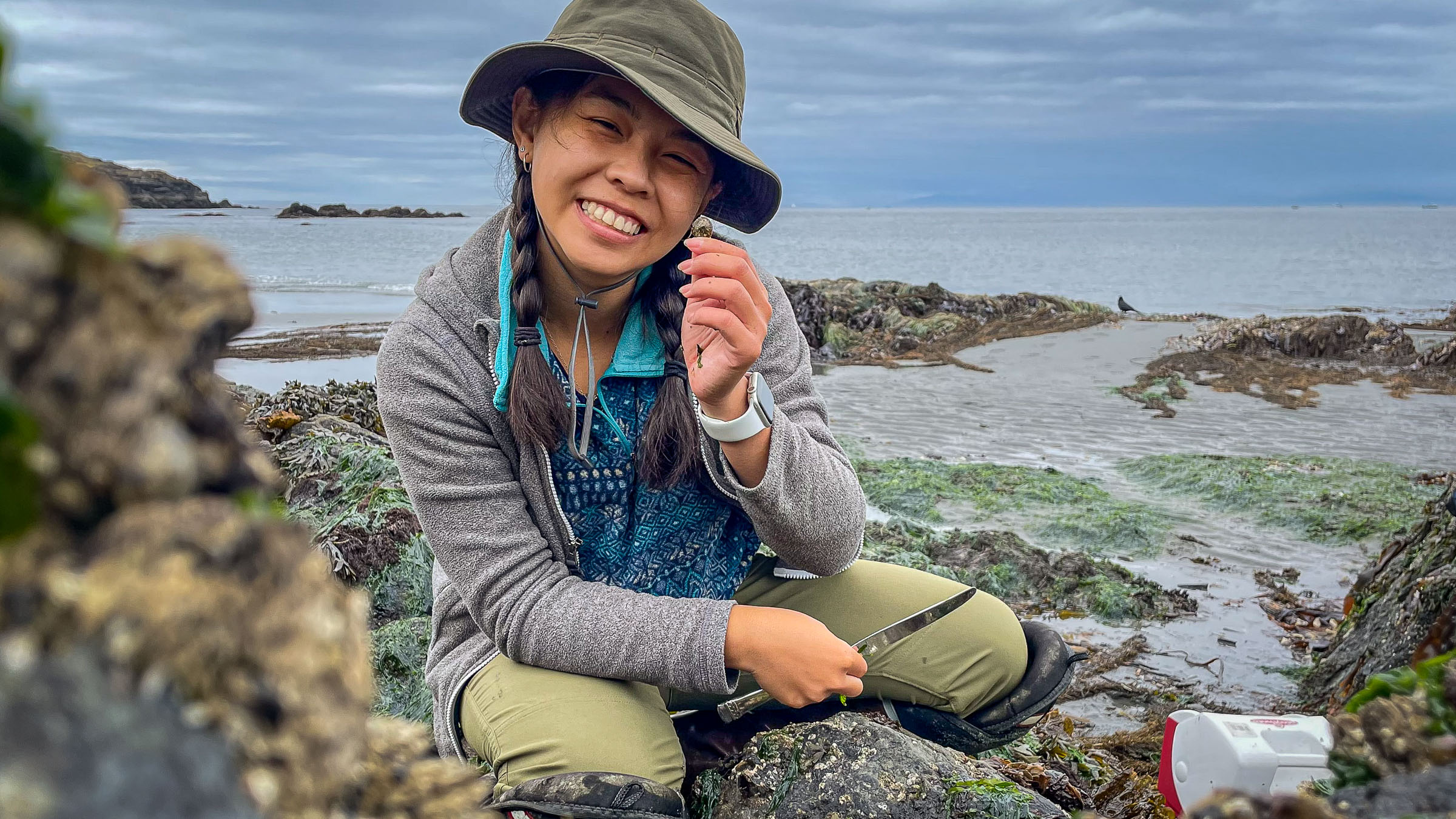
Aquarium CELP scholar Vivian Sieu highlights how she studied the added stress on sea stars in the turbulent tidepools.
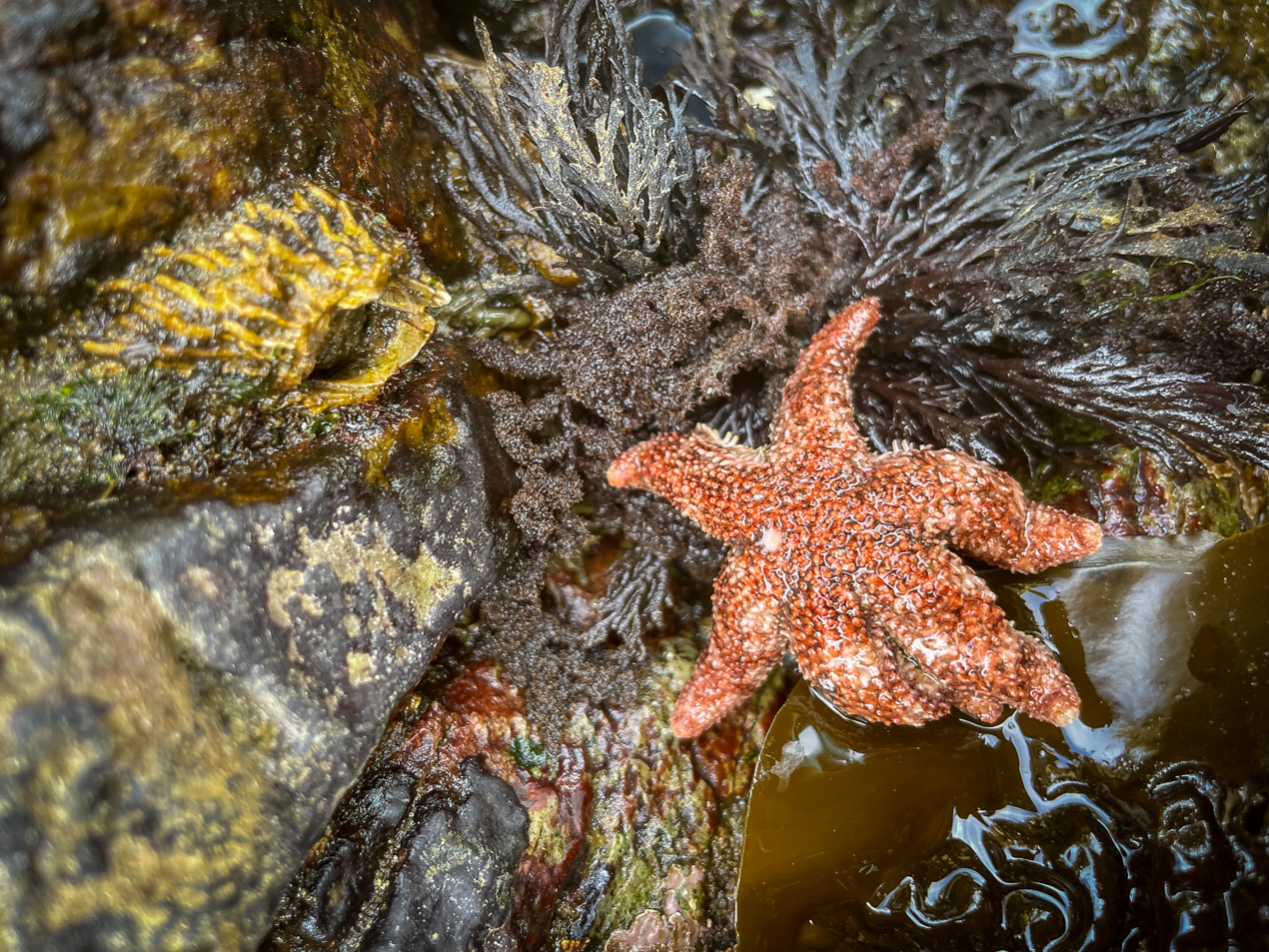
Sea stars were once a common sight in the tidepools along the Pacific coast, their bright colors standing out in the rocky intertidal zones. However, from 2013 to 2014, a mysterious disease known as sea star wasting syndrome swept through sea star populations along the West Coast, causing their bodies to melt and disintegrate. The cause of this disease is still unknown, though scientists believe that warming ocean temperatures, environmental stress, and pathogens may have played a role. A decade later, sea stars are slowly making a comeback, but their populations are still recovering.
Sea stars are predators that play an important role in nearshore marine systems by helping to maintain balance within the ecosystem.
As generalist predators, sea stars regulate the distribution and abundance of their prey, which can have cascading effects on the entire community. Understanding how environmental conditions influence predator-prey interactions is crucial for predicting and mitigating the impacts of climate change on intertidal communities.
As extreme events, like heatwaves, become more frequent and prolonged due to climate change, it is necessary to understand how the interactions between intertidal species are affected by high temperatures. Temperature can affect the feeding rates of predators, which in turn can influence prey abundances and the overall structure of the ecosystem.
The rocky intertidal zone is a unique environment where organisms experience both terrestrial and marine conditions, making it an ideal system to investigate the effects of environmental stress.
Studying How Sea Stars Interact
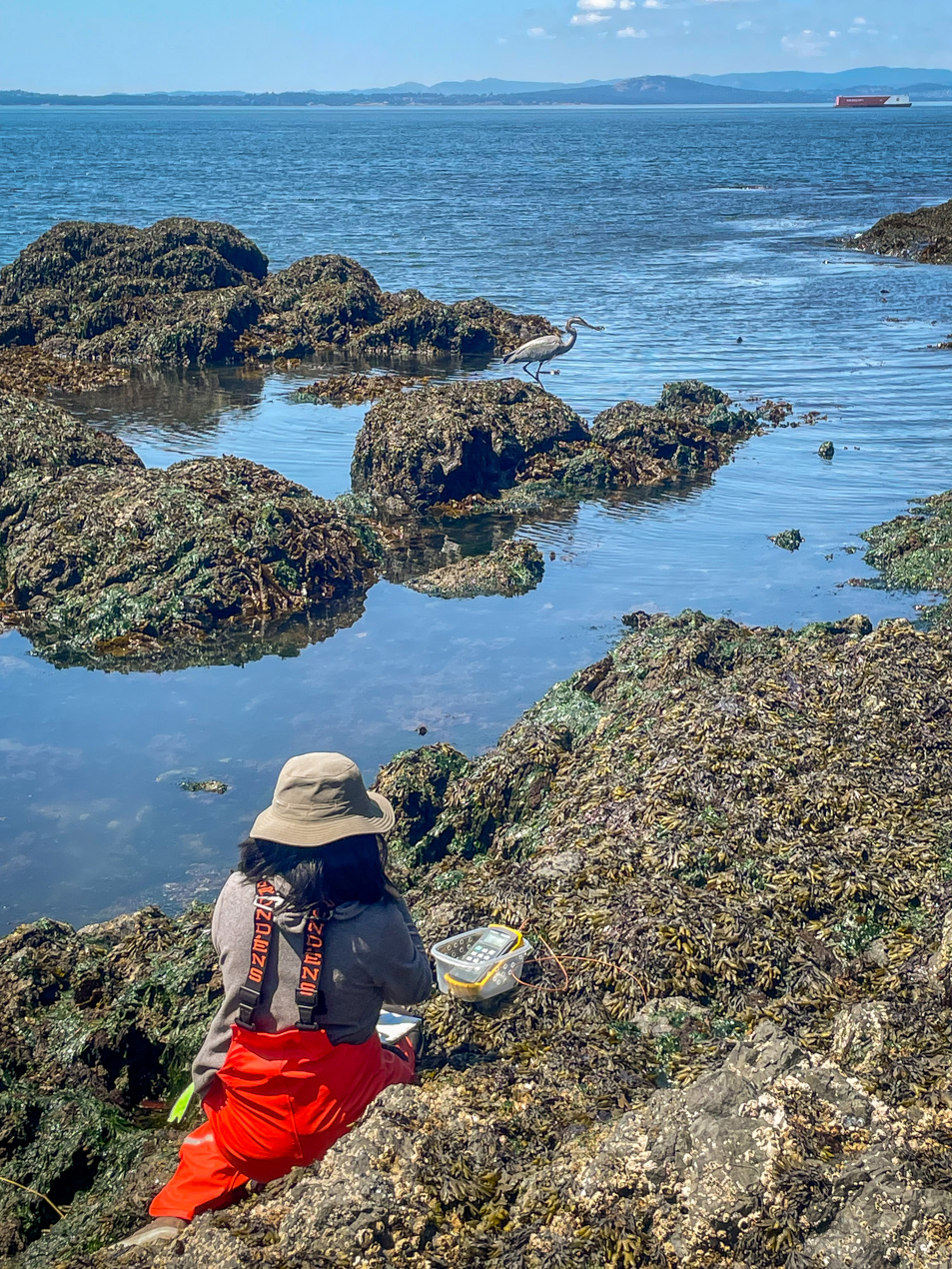
For my master’s thesis at California State University, Fullerton, I wanted to study how sea stars interact with their prey and how the environment affects these interactions. The small six-armed sea star, Leptasterias, is plentiful along the Washington coast. This led me to the University of Washington’s Friday Harbor Labs, where I conducted research on how low tide exposure and low tide temperature affect predator-prey interactions between Leptasterias and its limpet prey, Lottia scutum.
To simulate realistic environmental conditions, I designed experiments that exposed sea stars and limpets to temperatures they might encounter in the wild.
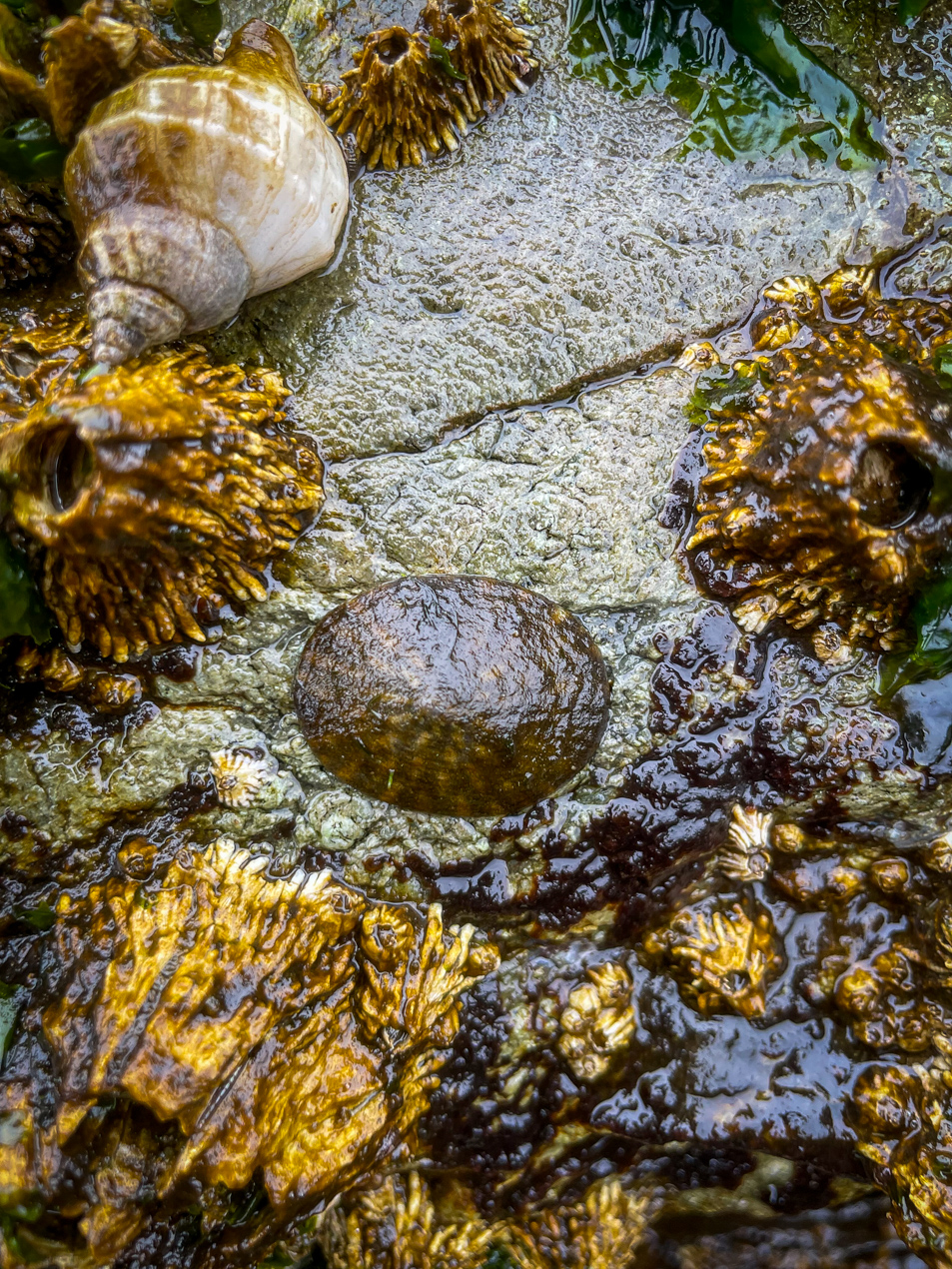
Based on previous research, I expected warm low tide temperatures to negatively affect the sea stars, since heat stress is known to impact echinoderms (the group of animals that include sea stars). However, I found that temperature alone did not significantly impact the sea stars in my study. Instead, the stress of low tide exposure, while sea stars were out of water, reduced their feeding rates and altered their behavior. This occurred even under current temperature conditions, compared to the sea stars that remained underwater throughout the experiment.
These findings highlight that the intertidal zone is already a challenging environment for its inhabitants. As climate change intensifies, increasing the frequency and severity of low tide exposure and temperature extremes, the challenges these animals face may worsen. Studies like mine are essential for understanding how environmental stress affects key predators and, by extension, the broader intertidal community. This knowledge can help scientists predict the future of these ecosystems and guide conservation efforts to protect them.

Vivian Sieu
Vivian Sieu is a member of the 2024 cohort of the Aquarium’s CELP (Community, Equity, Learning, and Persistence) Scholar Program. She is currently a Sea Grant State Fellow at the Delta Stewardship Council. She is one of 22 recipients of a year-long fellowship offering hands-on training related to policy and management of marine, coastal, and watershed resources. She recently earned her master’s in biology from California State University, Fullerton (CSUF). Her thesis studies the impact of low tide temperature on predator-prey interactions on the Washington coast.