Conservation Corner
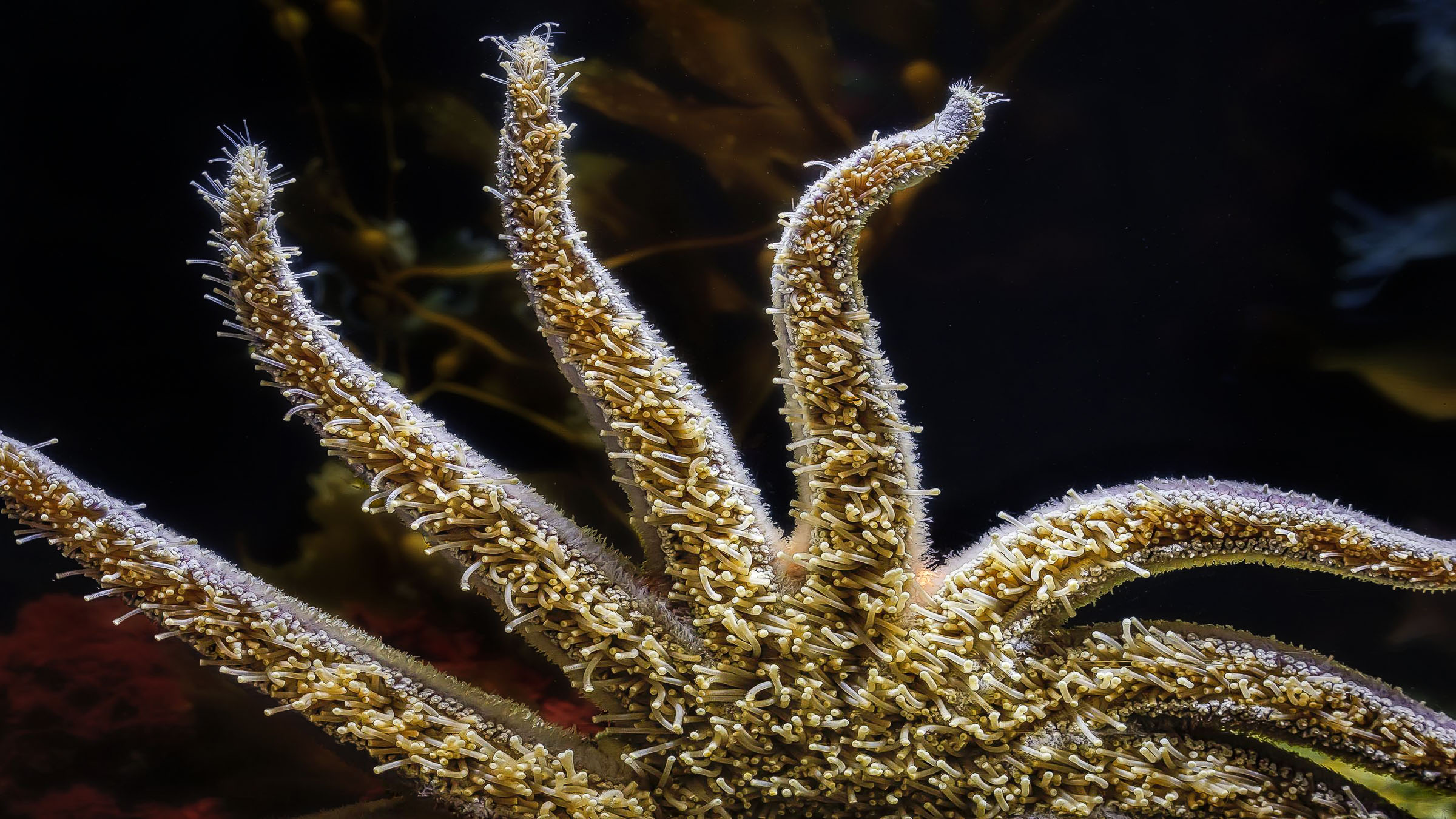
15,000 Tube Feet Hanging On For Dear Life
The Aquarium is rearing sea stars to contribute to sunflower sea star conservation.
Behind the scenes at the Aquarium, there are some adorable sea stars about the size of a quarter with eight arms. Most sea stars have five, but these already have eight and are on their way to twenty-four. These are baby sunflower sea stars. They were “born” on Valentine’s Day last year and were instantly famous–earning an article in the NEW YORK TIMES.
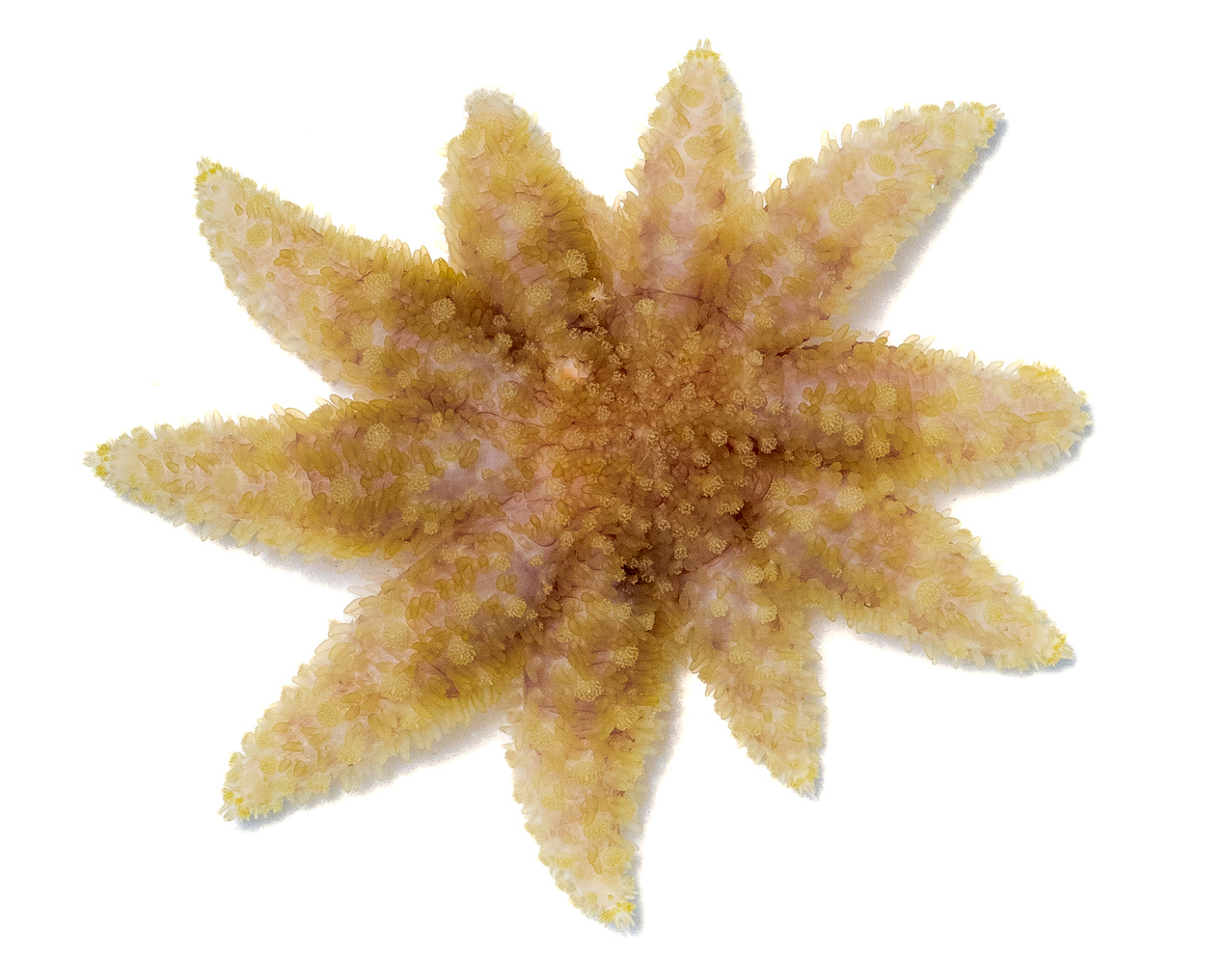
Sunflower sea stars are broadcast spawners, which means that they make their babies when adult male and adult female stars release gametes into the water adjacent to each other. The gametes mix, forming fertilized eggs that eventually grow up to be baby sea stars. The sunflower sea stars at the Aquarium are a product of a coordinated breeding effort in California. Five partners, including the Aquarium, came together to form a working group to spawn adult sunflower stars under human care. This became necessary because sunflower sea stars are facing extinction.
Sunflower sea stars were once abundant in our kelp forests. They are large sea stars with up to twenty-four arms and 15,000 tube feet. They are voracious predators–eating urchins, snails, crabs, and even other sea stars. They help maintain food web balance in the kelp ecosystem.
Billions of sunflower sea stars died in only a few years. The sunflower sea star’s range extends from Alaska to Baja Mexico, but there is no range-wide population estimate. Experts documented five sunflower sea star sightings in 2023 in Northern California–these were the first since 2015.
Scientists still do not know much about the wasting syndrome. They suspect, but are not sure, that it is a bacterial infection. It appears to spread quickly and easily between animals. Since scientists do not know what it is, it also does not have a cure. Nearly all stars showing signs of wasting do not recover.
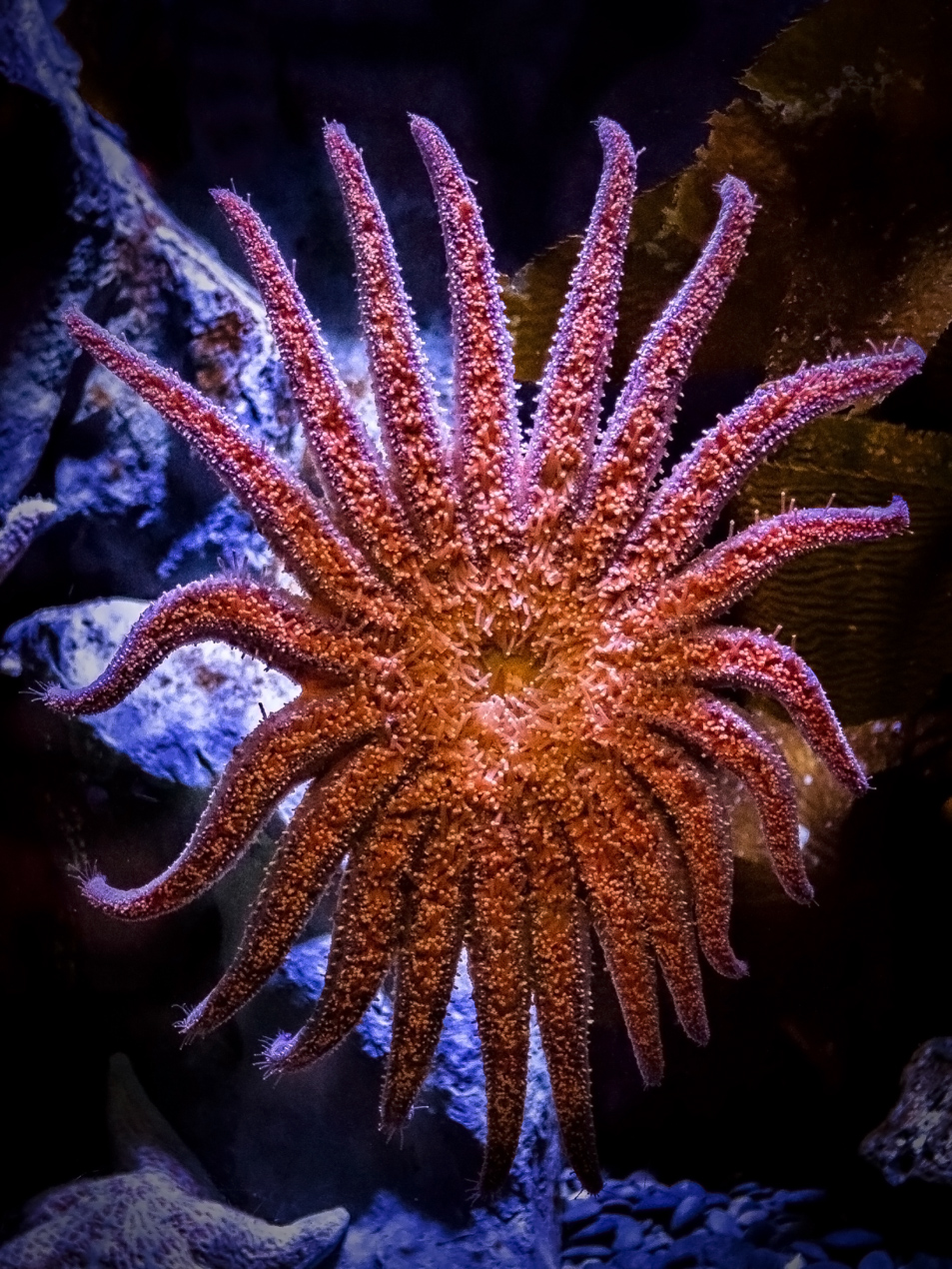
Sunflower sea stars under human care became a refuge population after the outbreak and an opportunity for breeding. The February 14, 2024, breeding event was the first successful one in California since the founding of the original Sunflower Star Working Group.
Recovery Efforts Are Expanding Under the Pacific Coast Ocean Restoration (PCOR) Initiative
PCOR is a collaboration of partners across California that “aims to deliver transformative impact for rocky reef ecosystems and coastal communities through the recovery of key marine species and habitats, starting with the white abalone, sunflower sea star and kelp forests.” The initiative is led by the Nature Conservancy and includes partners such as Aquarium of the Pacific, California Academy of Sciences, California Department of Fish and Wildlife, The Bay Foundation, Greater Farallones Association, University of California, Santa Barbara, California Ocean Protection Council, Sunflower Star Lab, and Paua Marine Research Group. The Aquarium is most deeply involved in PCOR’s sunflower sea star work, which focuses on a coordinated captive breeding program and outplanting plan for returning sunflower sea stars raised under human care back to the ocean.
The baby sunflower sea stars at the Aquarium came before PCOR, but they are part of the program moving forward.
The Aquarium’s baby sunflower sea stars are receiving special care. Their holding areas are kept separate from other stars to prevent the introduction or spread of wasting disease. Each facility is perfecting growing live foods–like sand dollars and urchin larvae –to feed the baby stars. The staff caring for these stars are learning each day, preparing to care for future cohorts of baby stars, and planning coordinated spawn events. This program has tiny but mighty rewards.
There are many years ahead before our tiny sunflower sea stars will be big enough to consume an entire adult urchin on their own— and many more years before they will be put out in the ocean. We look forward to sharing them with you long before then. The stars will be on public display when conditions allow.

Jennie Dean
Jennie Dean is the Aquarium’s inaugural vice president of education and conservation. She focuses on the amplification and enhancement of the Aquarium’s work in species conservation and learning for all audiences. Previously Dean was a program director at the University of California, Los Angeles’ Institute of the Environment and Sustainability, where she oversaw programs engaging the private sector on corporate sustainability and consulted with island governments on sustainable development of their blue economy.