Stars of the Sea
Discover their delicate beauty, fascinating diversity, superhero powers, and the threats that could lead to sea stars fading forever.
The famous multi-armed and colorful invertebrates we know today as sea stars date back 450 million years. They evolved from ancient crinoids—like sea lilies and feather stars—which resembled flowers or palm trees.
Today there are over 2,000 species of sea stars throughout our oceans from the deep sea to coastal tidepools. Despite their ability to survive for millions of years, these popular and enduring creatures are under threat and may disappear forever.
The Structure of Sea Stars
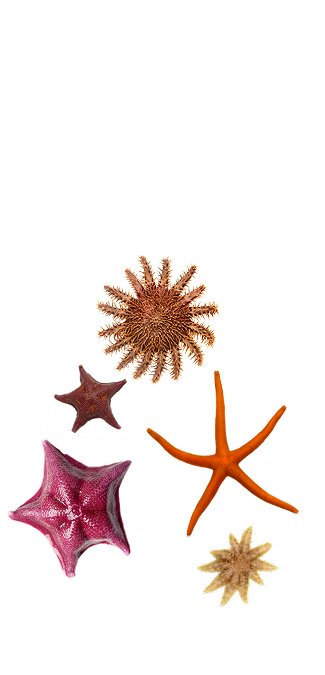
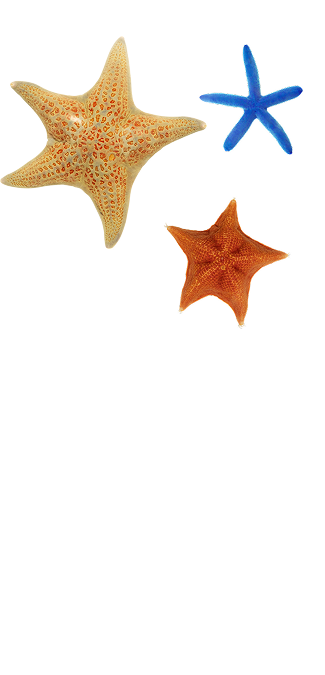
When most people think of a sea star, they picture a squishy, pink, five-armed organism. However, sea stars come in a variety of sizes, colors, patterns, and textures.
The smallest sea star is the paddle-spined sea star, which can grow up to one centimeter. Meanwhile, the sunflower sea star is undoubtedly the largest species, growing over two feet wide.
A sea star’s arms are attached to the “disk,” or the body. Their mouths are located on the center of their underside. Sea stars eat by pushing out their stomachs through their mouth, surrounding their food. Once the food—likely a mollusk or some algae—is partially digested, their stomach is pulled back into their body.
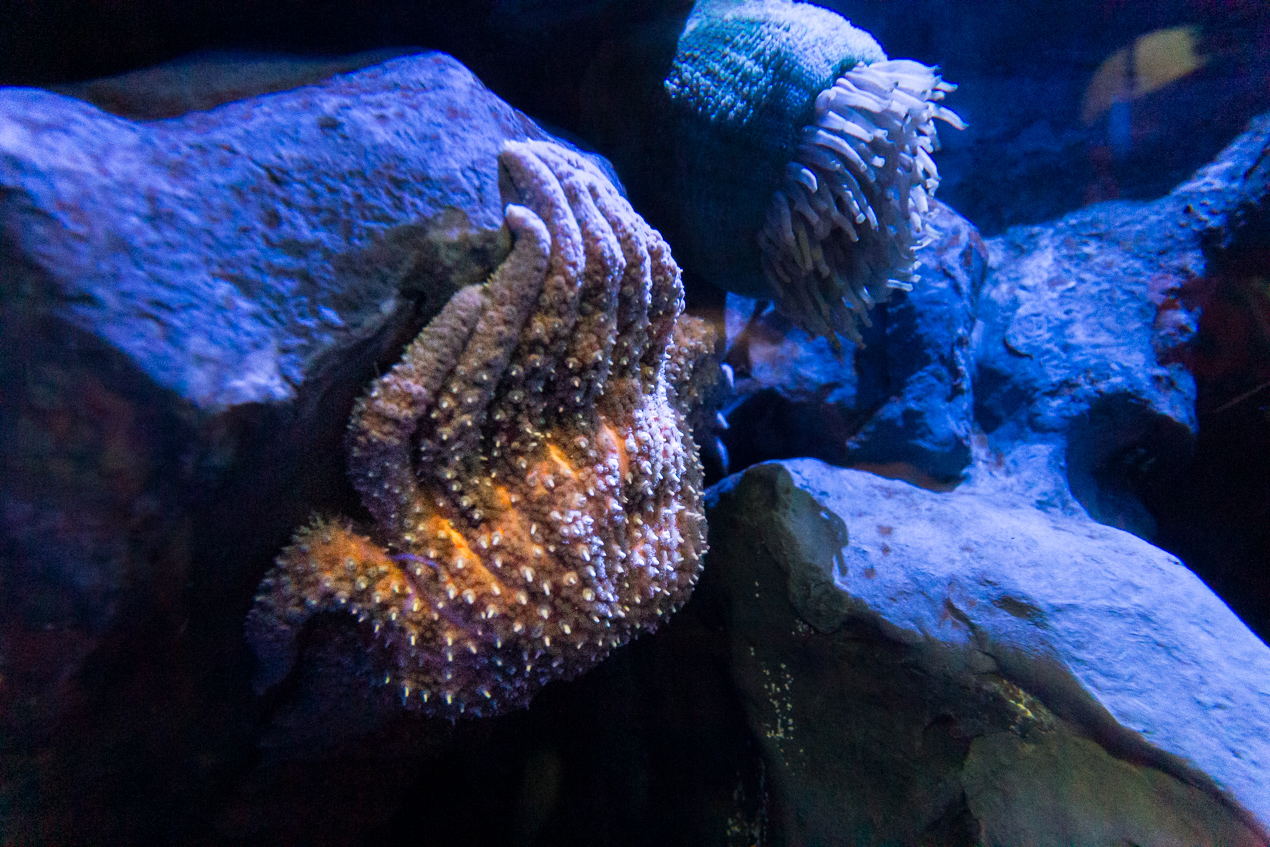
Sea stars are also hydro powered, drawing water into their bodies through a small opening called the “madreporite.” This process results in pressure changes, allowing them to move hundreds of sticky tube feet. Although they may seem stuck in place, sea stars can and do move around. Their tube feet are also used to catch food.
When sea stars run into a predator, they have a few ways of defending themselves. As echinoderms, they have tough, spiny skin like their sea urchin and sea cucumber cousins.
These spines deter predators such as crabs, seabirds, and otters by making them difficult to eat. Sea stars can also camouflage to blend into or break up their outline to match their surroundings.
These invertebrates can also drop and regenerate their arms to escape predators. This ability is particularly useful for sea stars that reproduce asexually through fragmentation, where the broken off arm regenerates into a new sea star.
That said, most sea stars reproduce by spawning, or releasing eggs and sperm into the water column. The fertilized eggs develop into free-swimming larvae that eventually settle on a surface and grow into adult sea stars.
Sea Star Stories of Importance
Among the thousands of species, there are some fascinating accounts unique to each one.
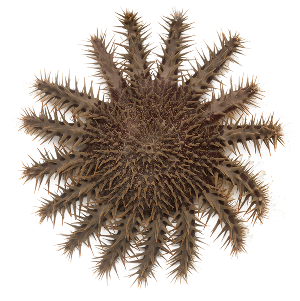
The crown-of-thorns sea star is native to coral reefs, while also preying on coral, eating the soft polyps inside. Population increases of this species have decimated coral reef habitats.
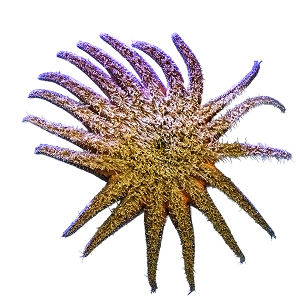
The sunflower sea star plays a key regulating role in their kelp forest ecosystem because of their diet. By feeding on sea urchins, these sea stars control the urchin population. Otherwise, urchins can overpopulate and graze kelp forests away. Declines in sunflower sea star populations have yielded an increase in urchins in what is called trophic cascade.
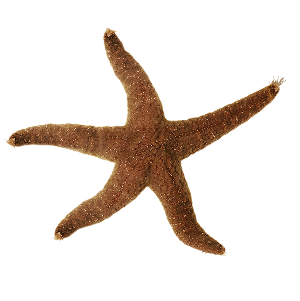
Ochre sea stars help manage their tidepool habitat as a keystone species. They eat mussels to make space for other animals to live.
The Threats Facing Sea Stars
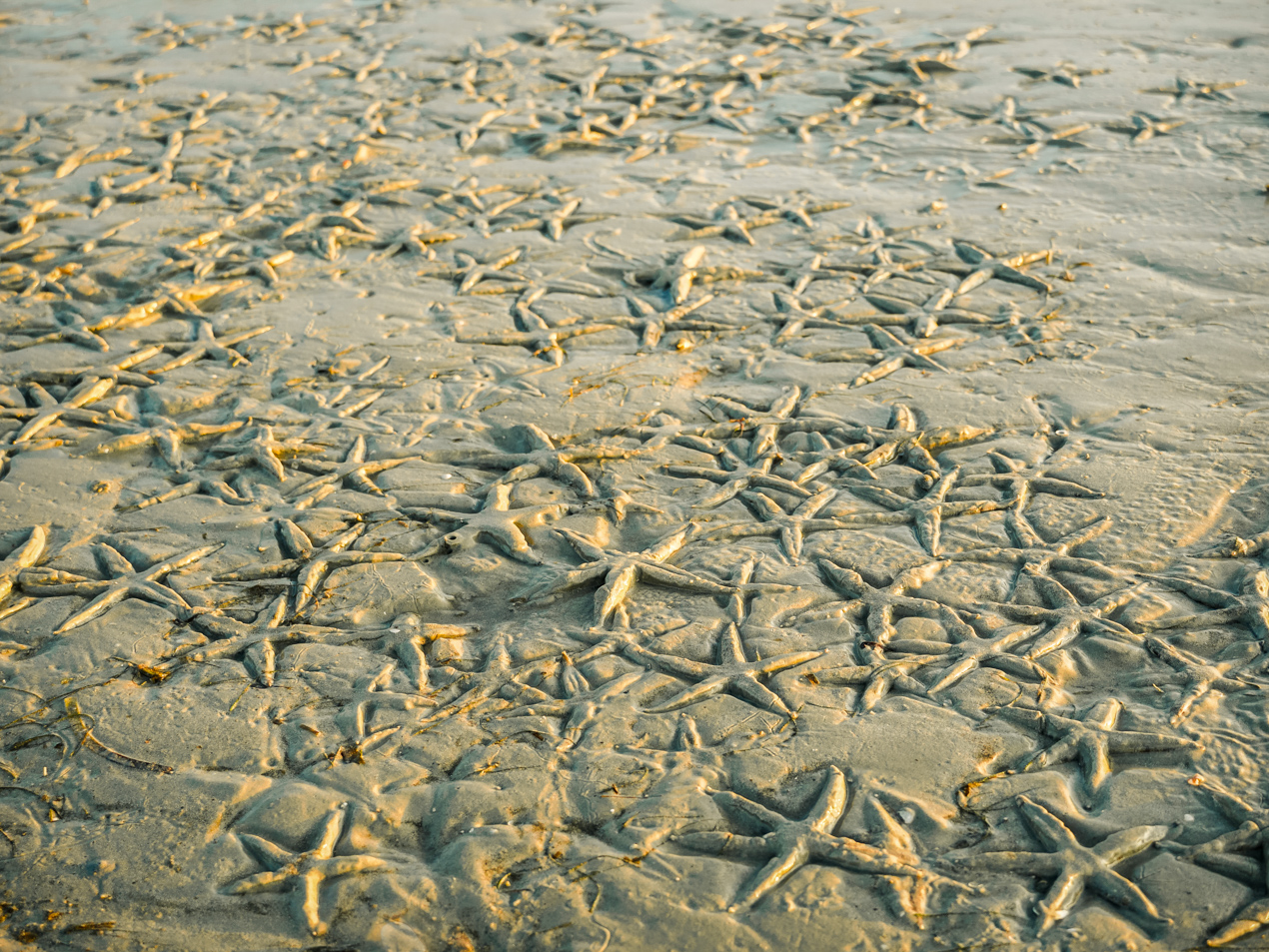
Sea stars are threatened by environmental stressors, like warming ocean temperatures, pollution, and changes in ocean chemistry due to climate change.
Their major looming threat is disease, including the devastating sea star wasting syndrome, which affects over twenty sea star species. The previously mentioned stressors lead them to be more susceptible to the disease.
Many sea star populations have not been able to bounce back to their former numbers, including the sunflower sea star. This species has been decimated along our coast by the sea star wasting disease.
The Aquarium of the Pacific is one of the founding partners of the Association of Zoos and Aquariums (AZA) SAFE program to help save the sunflower sea star from extinction. The Aquarium and other institutions are working together to rear juvenile sunflower sea stars under human care for eventual release in our local waters.
Sea Stars that Call the Aquarium Home
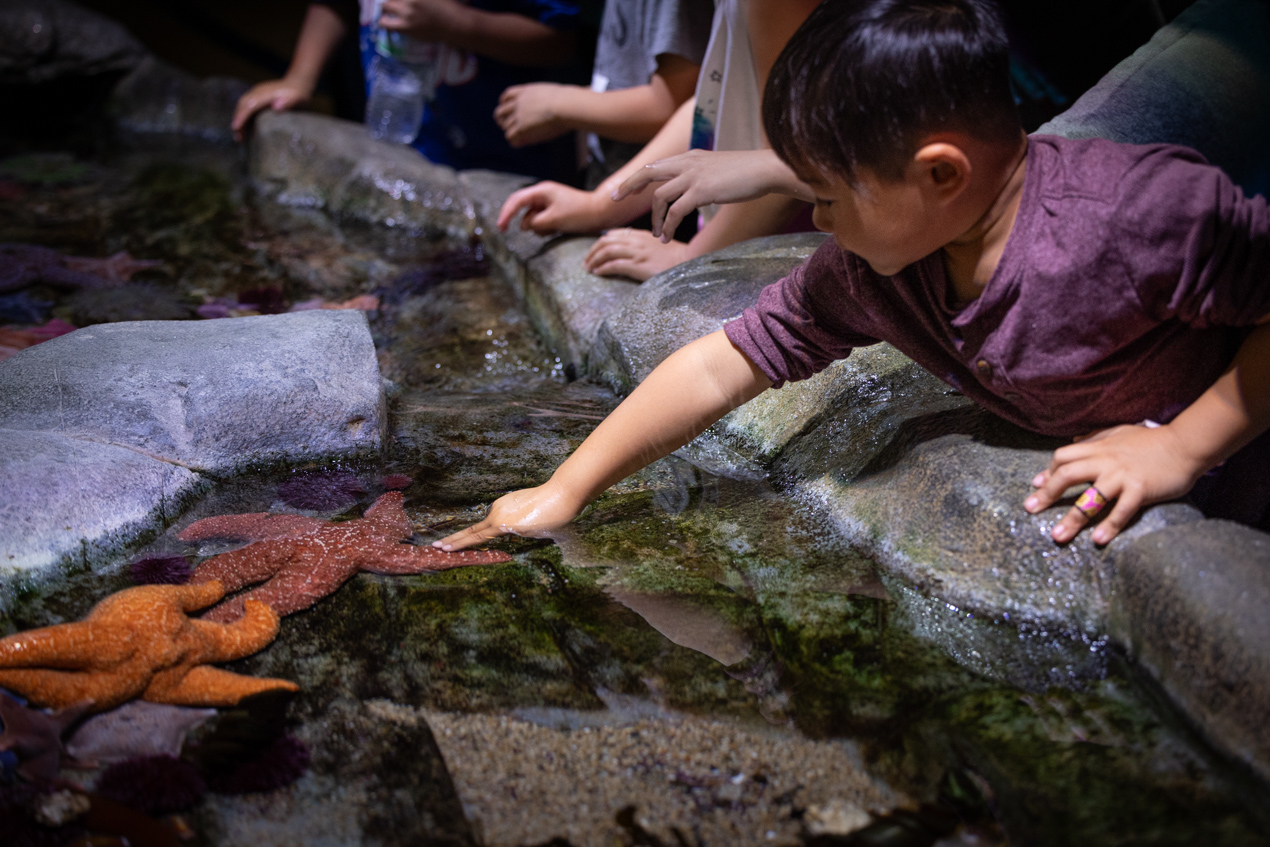
As you journey through the Aquarium this summer, you can meet sea stars in over twenty exhibits representing habitats from coastal tidepools and coral reefs to the deep sea and beyond.
You can also touch bat and ochre sea stars in the new Our Living Coastline outdoor touchpool experience. There you will learn about sea stars from educational staff, while marveling at other tidepool creatures such as sea urchins and sea anemones.
You will also discover a special display about the Aquarium’s research, breeding programs, and recovery efforts to bring the sunflower sea star back from the brink of extinction.
Whether it is their beauty, whimsical shape, or the enduring cartoon characters that brought them to life, sea stars live in a special place in our hearts and culture, and they serve an important role in our oceans.
With a little knowledge, concern, and support for conservation efforts, you can help these stars shine brightly for years to come.