Fresh Voices
Researching Green Sea Turtles in the San Gabriel River
Aquarium volunteer Jessica Medrano is researching green sea turtles in the San Gabriel River with the use of the Internet of Turtles, a software that uses facial recognition patterns to identify turtles.
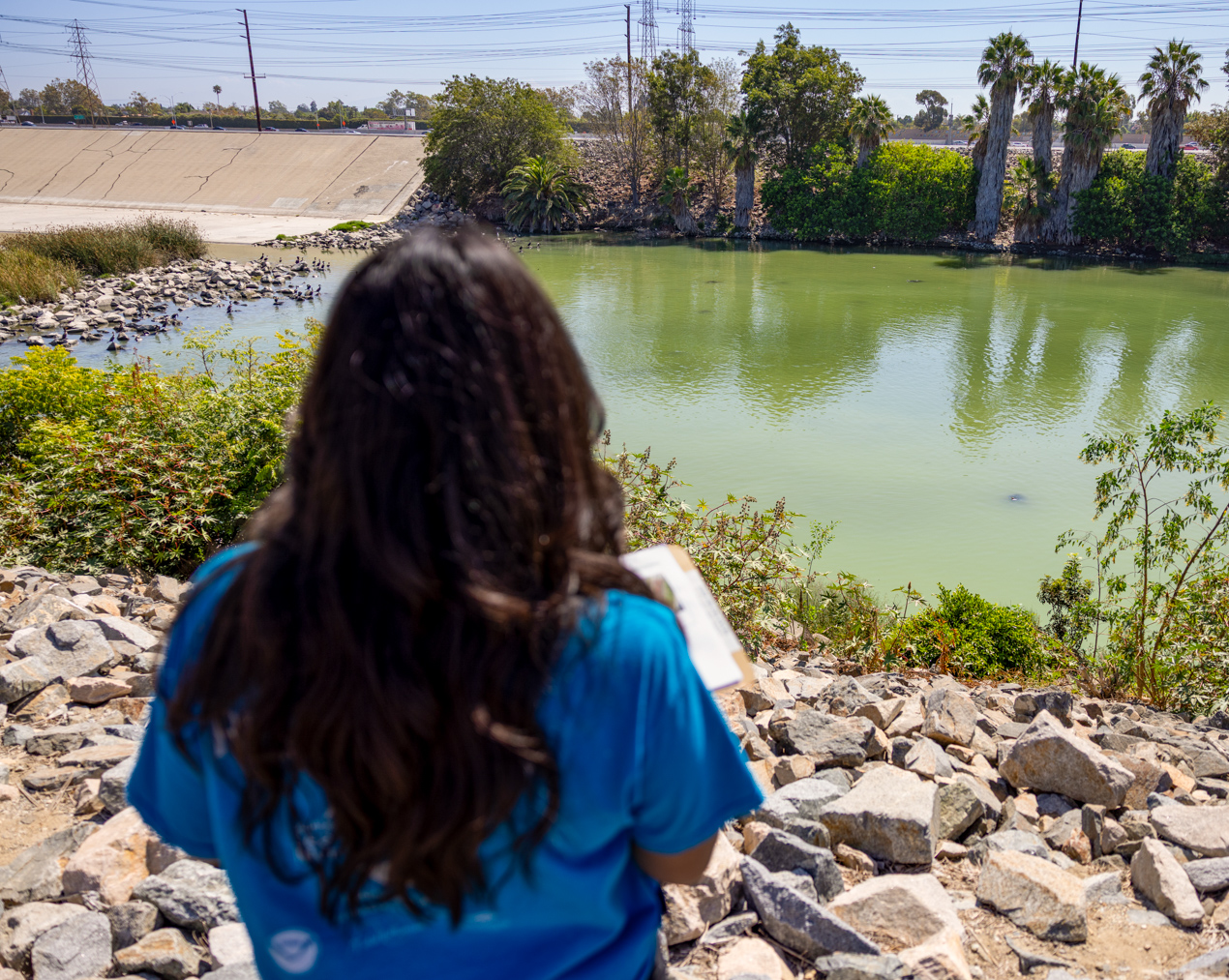
Green sea turtles (Chelonia mydas) are one of the most recognized turtles globally. From what you envision when snorkeling in Hawaii to Finding Nemo’s sea turtle character Crush, who would have imagined their presence in a channelized section of the San Gabriel River? Not me.
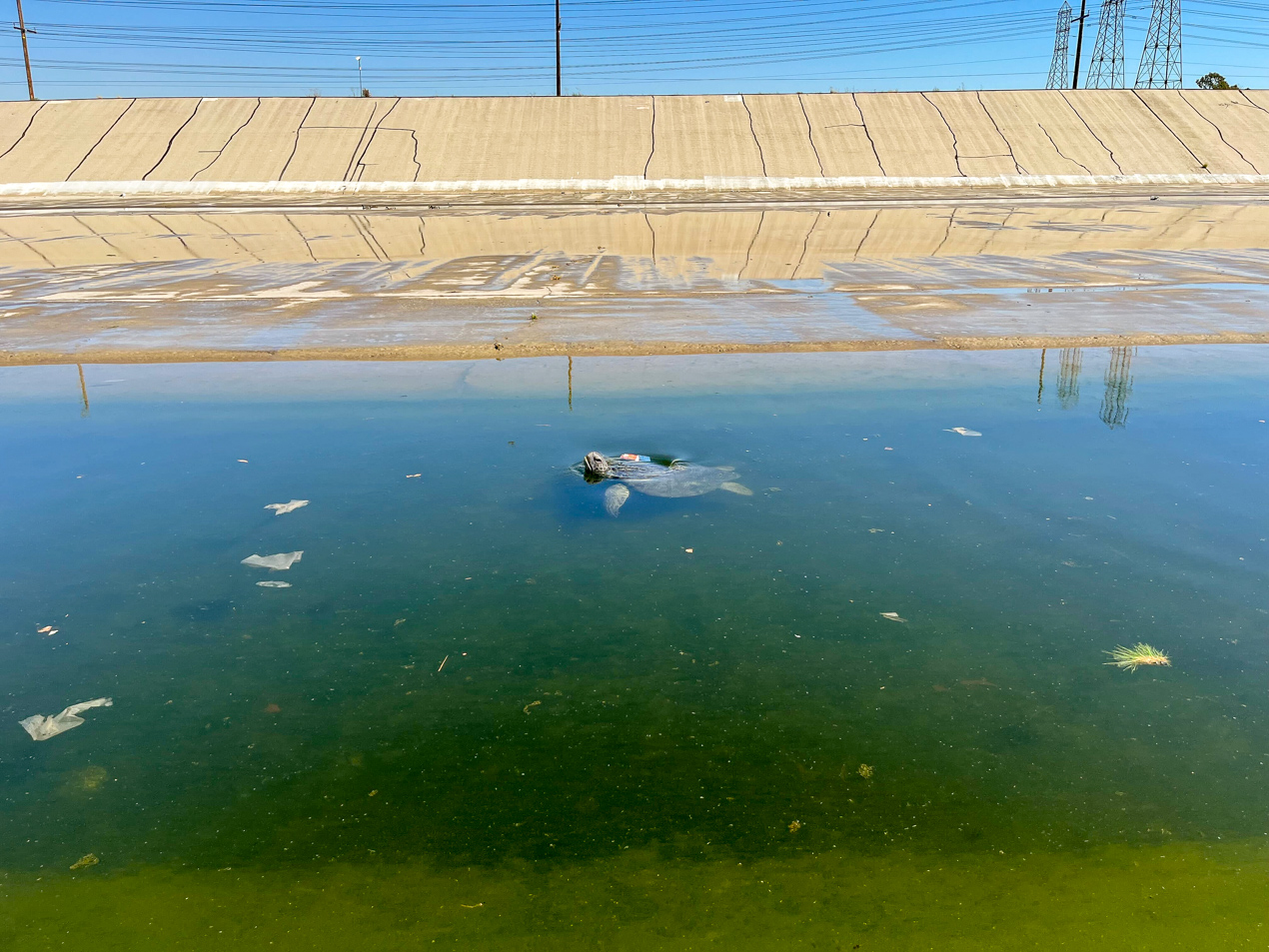
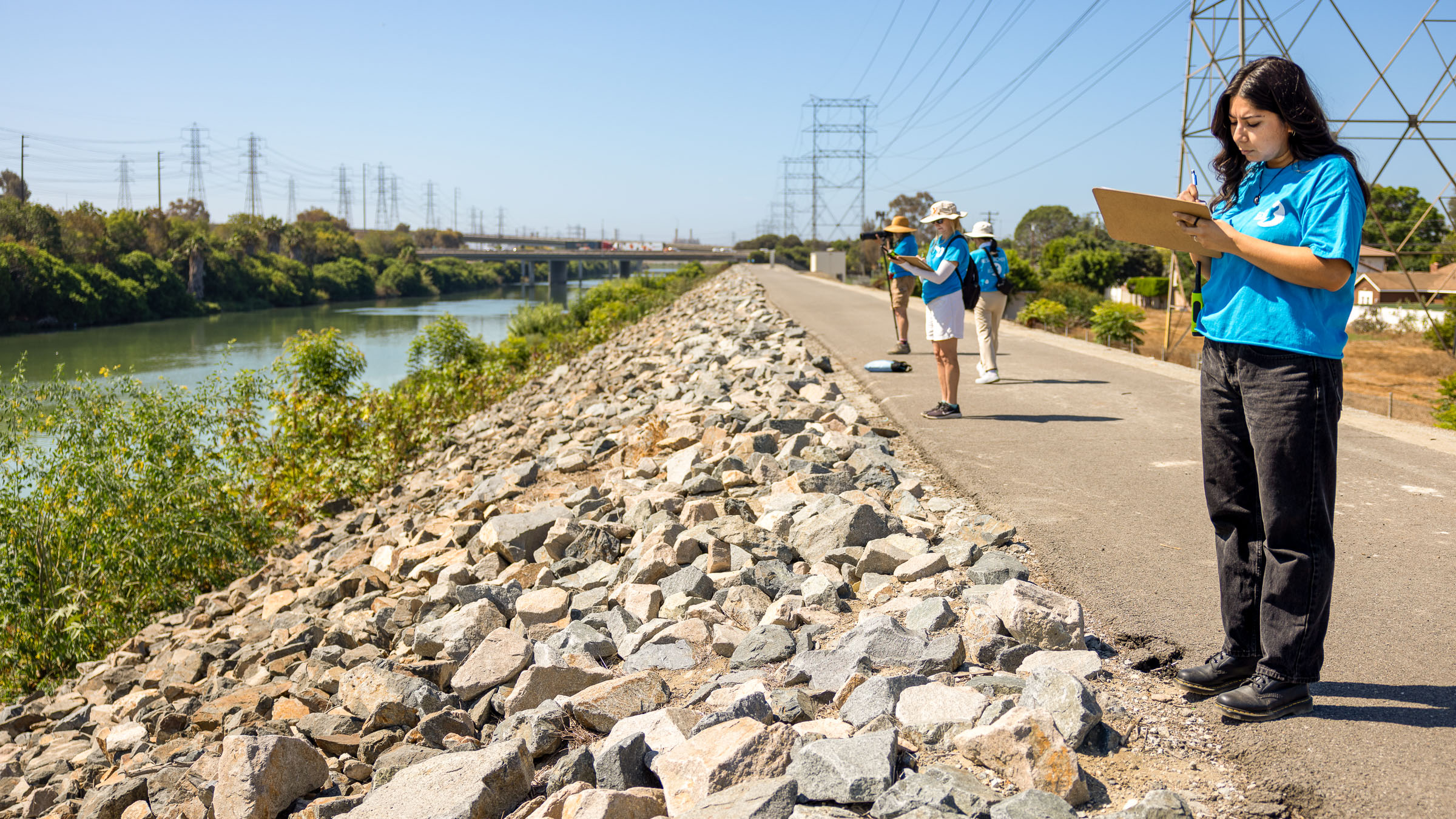
And yes, you read that correctly; green sea turtles can be seen in the San Gabriel River. Aquarium volunteers—including myself since 2017—gather along the San Gabriel River on the first Saturday of each month from 8:30 a.m. to 10:30 a.m. We monitor, count, and document the behavior of endangered green sea turtles to better understand how the species interacts with the environment in this region. This information supports tracking, conservation, and ongoing monitoring efforts, while contributing valuable data to current and future research initiatives.
Over the past eight years, I have witnessed the continued growth of this program and find each monitoring session as engaging and rewarding as the first. Although turtle sightings are never guaranteed, the experience has provided me with valuable opportunities to connect with a diverse network of individuals—including volunteers from various Aquarium initiatives, professionals across multiple disciplines, and students engaged in impressive research.
Through this involvement, I developed a deep passion for the project, ultimately inspiring my current research: How does the year-over-year presence and habitat use of green sea turtles vary in the San Gabriel River?
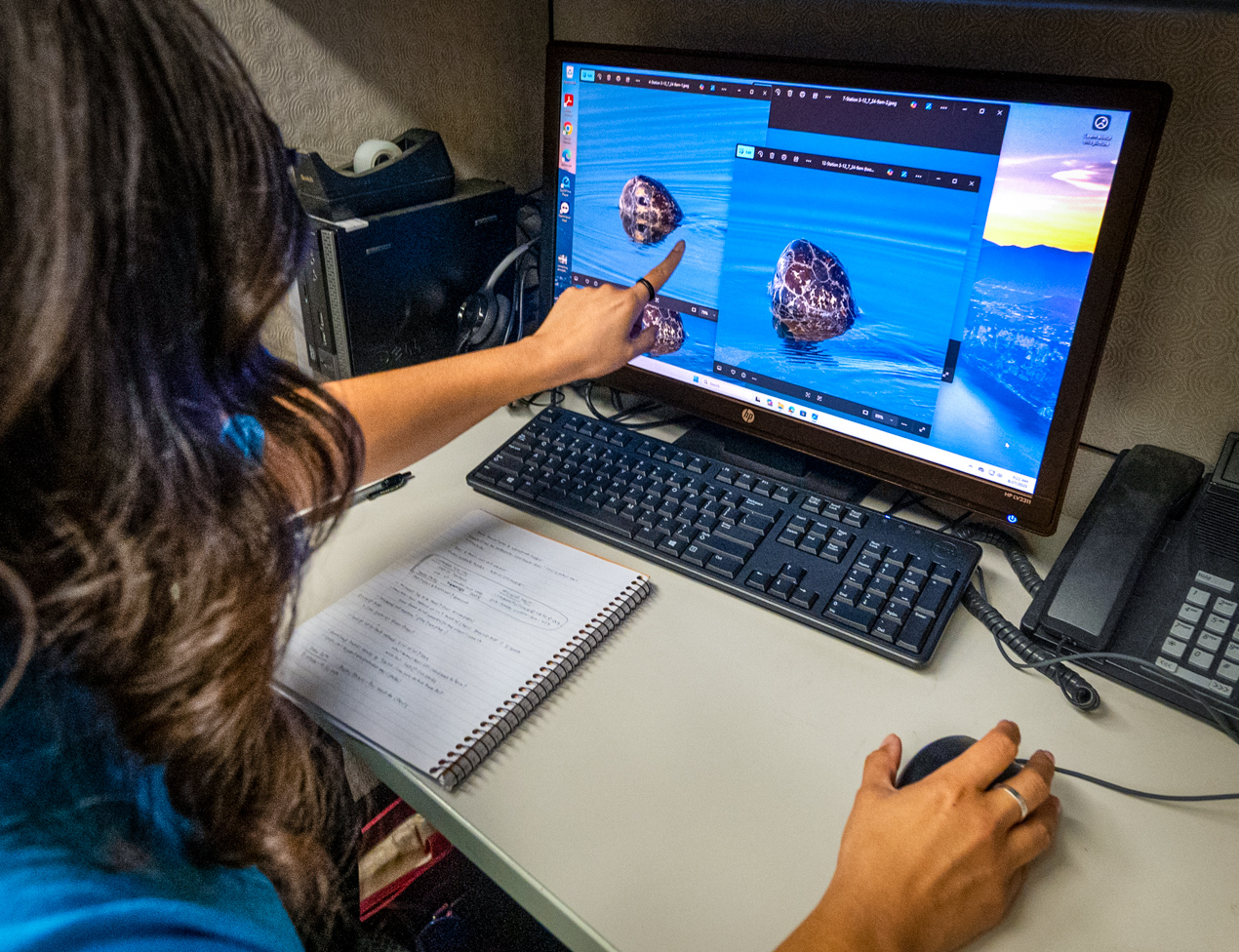
Computer software matches the scales on an individual turtle’s head and checks it based on other uploaded photos.
To trace migratory patterns of green sea turtles in the San Gabriel River, I use the photo identification (ID) component of the community science project. This involves volunteers capturing photos of green sea turtles surfacing or coming up for a breath in the San Gabriel River and uploading them to the Aquarium’s network. Then, I screen the photos and upload the images into the Internet of Turtles (IoT), an online database managed by Wild Me. The IoT platform uses advanced facial recognition software to identify individual green sea turtles based on their unique scute patterns.
While facial recognition technology is commonly associated with humans, this software was initially developed to distinguish individual zebras within herds, highlighting its versatility in wildlife research. I wasn’t previously aware that green sea turtles have unique facial scale patterns, much like fingerprints in humans. These patterns allow researchers to track individual turtles over time and help us understand how these turtles are using the area over the years, potentially revealing insights about local habitat use and turtle population dynamics.
To date, I have uploaded and processed photos collected between January and May 2025. Preliminary results indicate that the facial scute pattern recognition software is effective in identifying individual turtles. Current matches within the system have confirmed the presence of returning individuals in the San Gabriel River. As I continue to analyze the dataset, I anticipate identifying additional matches, which may provide broader insight into green sea turtle presence and habitat use within our greater ocean ecosystem.
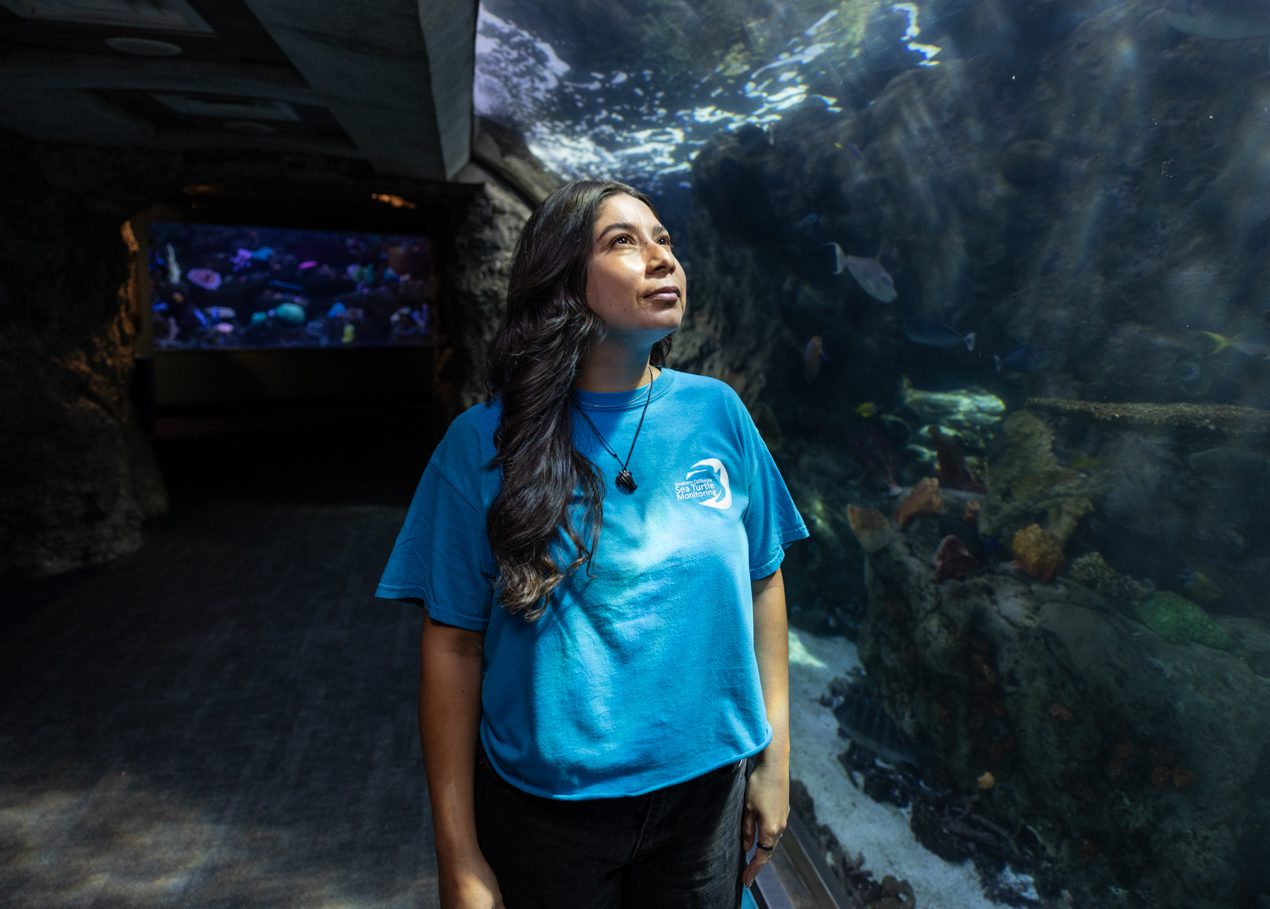
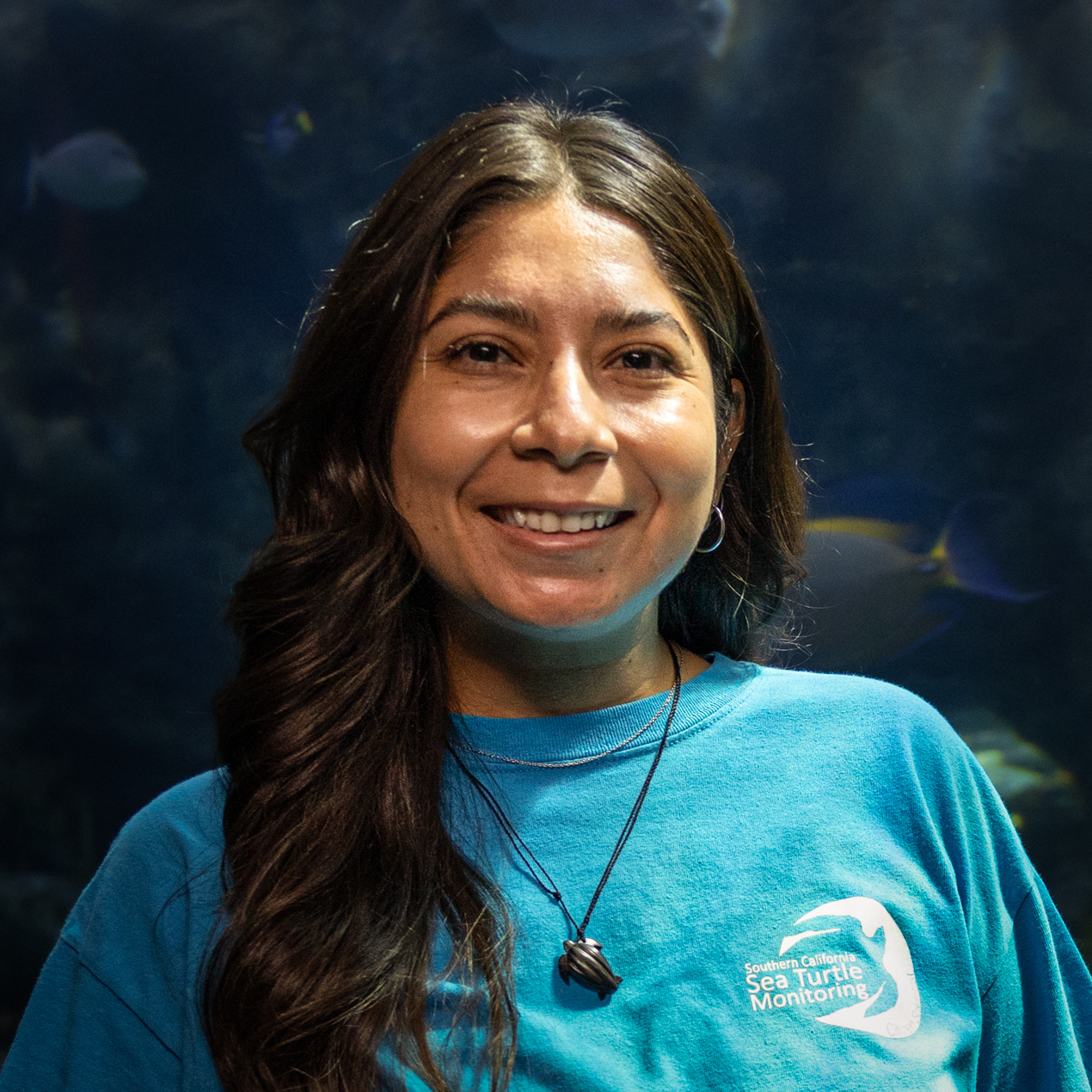
Jessica Medrano
Jessica Medrano has been an Aquarium of the Pacific volunteer since 2017. She is currently a graduate student at California State University, Fullerton (CSUF) where her project focuses on tracing the migratory patterns of green sea turtles in the San Gabriel River. She is pursuing her degree in environmental studies.