Southern California’s Unlikely Population of Green Sea Turtles Continues to Surprise
First documented in the San Gabriel River in 2008, green sea turtles were once an occasional sighting. This past spring, onlookers were stunned to see dozens filling the narrow concrete river channel in a “sea” of turtles.
Large influxes of green sea turtles that fill the San Gabriel River channel on occasion—like earlier this spring—enjoy basking in the water that was warmed by the sun due to the surrounding concrete. The channel’s high tide of over five feet and significant presence of algae also made this historic wetland site a welcome home for this species.
The Aquarium of the Pacific has been actively monitoring, providing data to scientists, and when needed providing medical care to these special Southern California residents for more than 25 years.
Calling Southern California Home
Green sea turtles are normally found in warm subtropical and tropical waters around the world, but they also have a resident population in Southern California. Stretching from the San Diego Bay to our local San Gabriel River, these popular animals thrive in California’s coastal wetland habitats. Our open ocean provides them with lush kelp forests and seagrasses and invertebrates like sea jellies that juvenile green sea turtles feed on.
It was once thought that the resident population of green sea turtles in the San Gabriel River gathered near the warm waters of the local power plant. Further research from the Aquarium’s Southern California Sea Turtle Monitoring Project showed that the species is specifically active near the outflow of the Los Cerritos Wetlands. This environment is appealing to them because of the warm, shallow water.
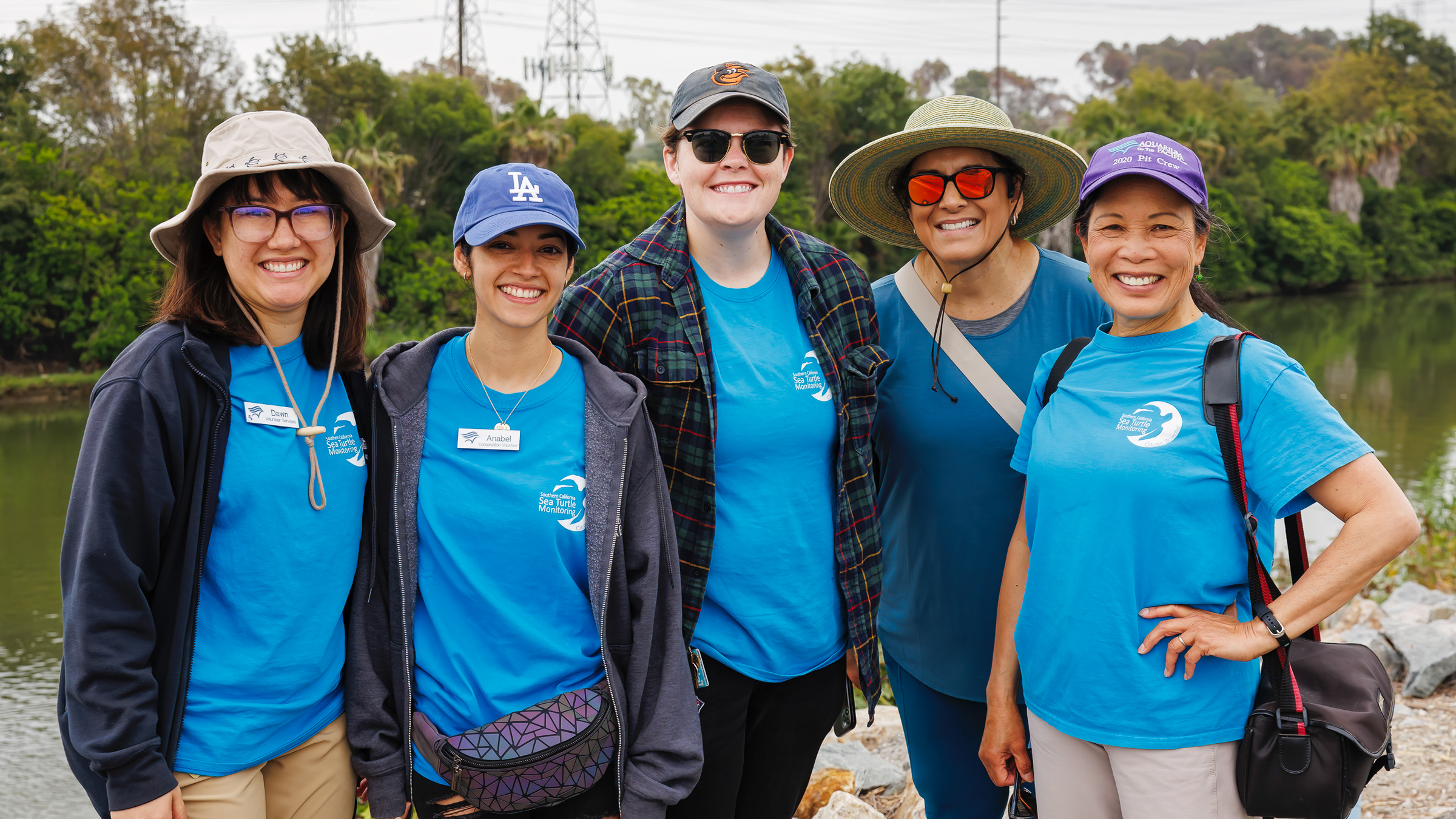
The monitoring project is a monthly event where Aquarium volunteers track sea turtle activity along the river. They examine the turtles for thirty minutes during their most active period in the morning. This also includes a photo identification program, where volunteers take photos of turtles surfacing in the river.
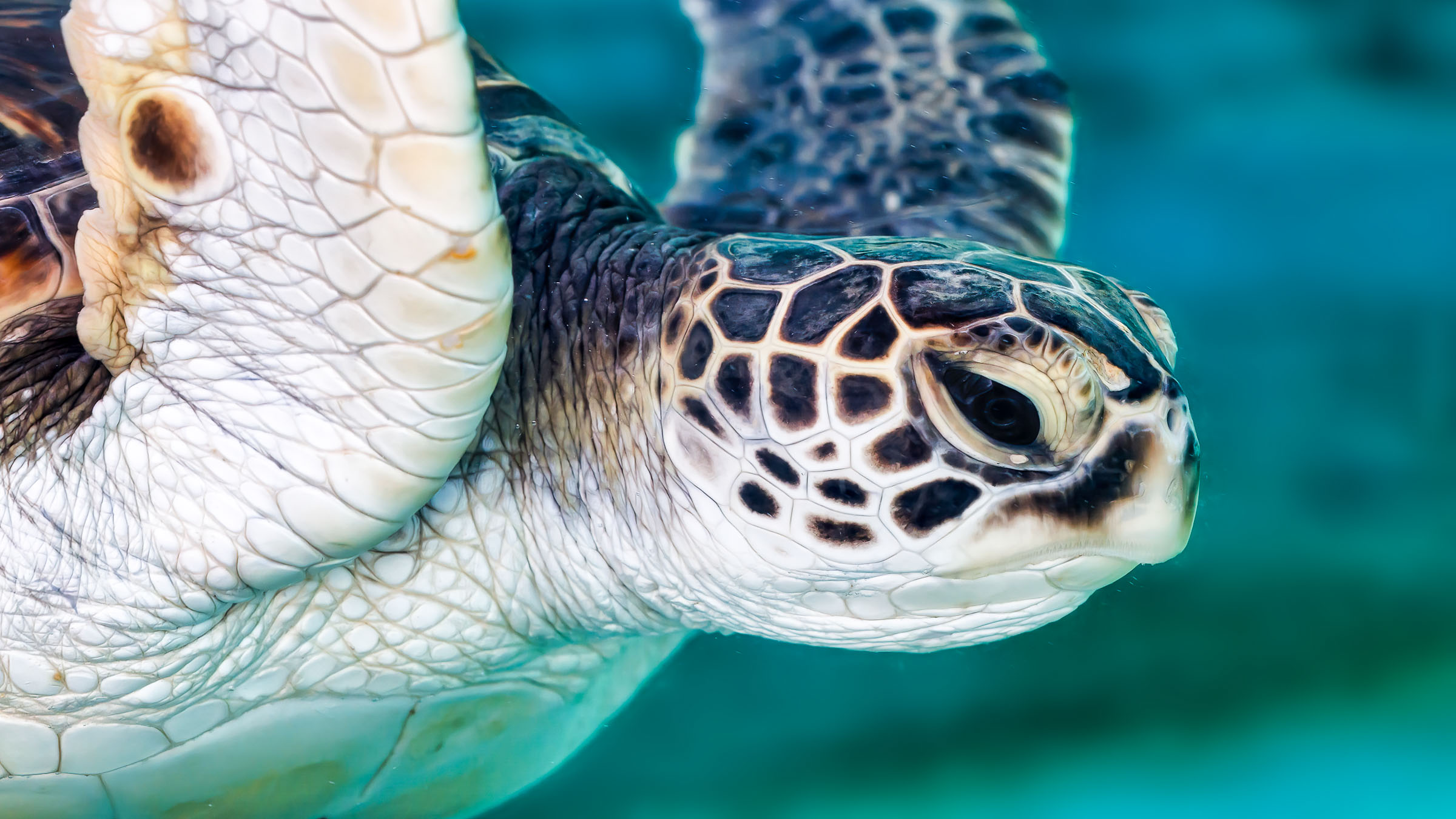
“What we’re looking for is the pattern of facial scutes,” explains Dawn Nygren-Burkert, conservation volunteer coordinator. “The scales on their face are individual to each turtle, kind of like a thumbprint.”
In March 2025, volunteers from the Aquarium of the Pacific were doing their monthly Saturday morning monitoring of green sea turtles in the San Gabriel River, when they were notified of an entangled turtle down the river. The volunteers called in to the National Oceanic and Atmospheric Administration (NOAA) Sea Turtle Stranding Network to report it, and soon the Aquarium’s husbandry and veterinary teams were on the scene to rescue the turtle and transport it to the facility for further care.
“Seeing our volunteers be so passionate about the sea turtles and doing the most they can to help conserve them in the river is always a proud moment for me,” said Nygren-Burkert.
Rescue, Rehabilitation, and Release
The Aquarium of the Pacific’s veterinary and husbandry teams are often called on in collaboration with NOAA to rescue entangled, trapped, or stranded sea turtles on beaches and in rivers across Los Angeles County. To date, we have cared for twenty-nine turtles. If the turtle is deemed sick or injured, it is brought back to the Aquarium for an assessment.
“Once a sea turtle arrives, it gets a physical exam, which includes things like getting weighed, measured, and photographed,” said Dr. Lance Adams, Aquarium veterinarian. “For the exam, we take x-rays to look for any ingested material, particularly metallic things like fishhooks. Sometimes we can even see plastics if there’s a lot of it in there.”
During the rehabilitation process, Aquarium veterinarians routinely monitor the turtle’s injuries for progress, and they check bloodwork to make sure it’s not showing signs of internal infections.
Rescued sea turtles on the mend from injuries can soon be observed in a new on-site, 4,000-gallon rehabilitation enclosure near the Molina Animal Care Center. The Aquarium received a grant to construct this from the National Fish and Wildlife Foundation with support from NOAA, as well as matched funds from the KM Shimano Family Foundation.
Once the turtle is deemed healthy and the proper ocean conditions are present, it is released either at the beach or in the open ocean.
Green Sea Turtle Biology
Green sea turtles normally grow to nearly five feet and weigh anywhere from 150 to 419 pounds. They can move fluidly in the water due to their shell—which reduces drag in the water—and their paddle-like flippers.
The subpopulation of green sea turtles that dwell in our local San Gabriel River are regionally known as Eastern Pacific green sea turtles. These subadult turtles show typical foraging behavior. Since this species doesn’t have teeth, they use their serrated beaks to eat plants like algae.
In the wild, green sea turtles can live for up to eighty years. When they are between twenty and fifty years old, our local population travels south where they begin mating on nesting beaches in Michoacán, Mexico. Female turtles lay on average, five large groups of eggs called a “clutch,” which can include between 75 and 120 eggs per clutch. After that, the turtles make the trek to Southern California to forage, making stops in our bays, lagoons, and estuaries.
Conservation Threats to Green Sea Turtles
Green sea turtles are listed as endangered by the Endangered Species Act and by the International Union for Conservation of Nature. While their population is seeing a strong increase today, they remain susceptible to declines due to human activity and climate change.
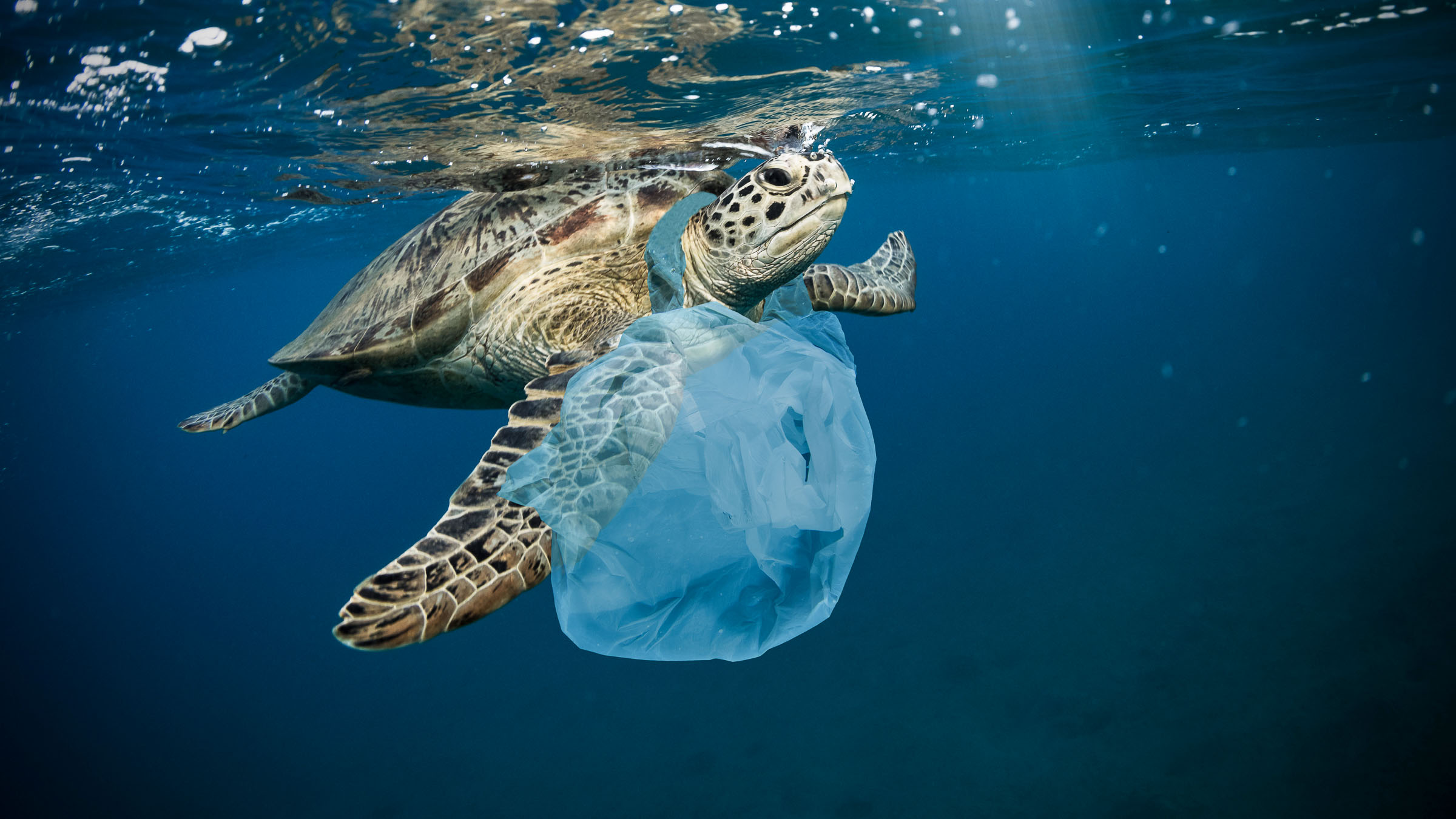
Plastic bags floating in the ocean are often mistaken for jellies by green sea turtles. The ingested bags harm and block their digestive systems. Pollutants and high concentrations of heavy metals also make their way into a turtle’s bloodstream. Other common injuries seen by the Aquarium’s veterinary team are hooks embedded in a turtle’s mouth or flippers, or other injuries from fishing lines. Boat strikes are also becoming increasingly common, which can cause serious injuries or fatalities.
Global warming creates more challenges for green sea turtles. The temperature of the sand on the nesting beach determines the sex of the turtle hatchling. If it’s too warm, the eggs will result in a female turtle. If the temperature gets even warmer, there’s a chance that those eggs won’t hatch at all. As beaches get warmer over time, fewer male turtles will be born, making it more difficult for female turtles to find a mate and keep populations stable. On the other hand, drastic drops in water temperature below sixty degrees can lead cold-stunned turtles to wash up on the shore. The colder temperature slows down the turtle’s metabolism.
What You Can Do To Help
Green sea turtles call our ocean backyard home, and there is plenty we can do to make their home more comfortable, including picking up trash, not discarding fishing lines and hooks in the water, reducing your carbon footprint, and more.
If you see a stranded sea turtle, please call the West Coast Marine Mammal and Sea Turtle Stranding Network’s 24/7 hotline at (562) 506-4315.