Conservation Corner
Everyone’s a Scientist. Yes Everyone!
During the 5th California Community Science Symposium hosted at the Aquarium of the Pacific, nearly every speaker reinforced the theme that you do not have to have specific experience to join the world of community science. All that is required is interest and enthusiasm. Everyone is a scientist.
Held this past October, the symposium drew 115 participants from across the state to share their community science projects and foster collaboration. Community science is the term used to describe scientific research conducted by people who are not professional scientists participating as a volunteer.
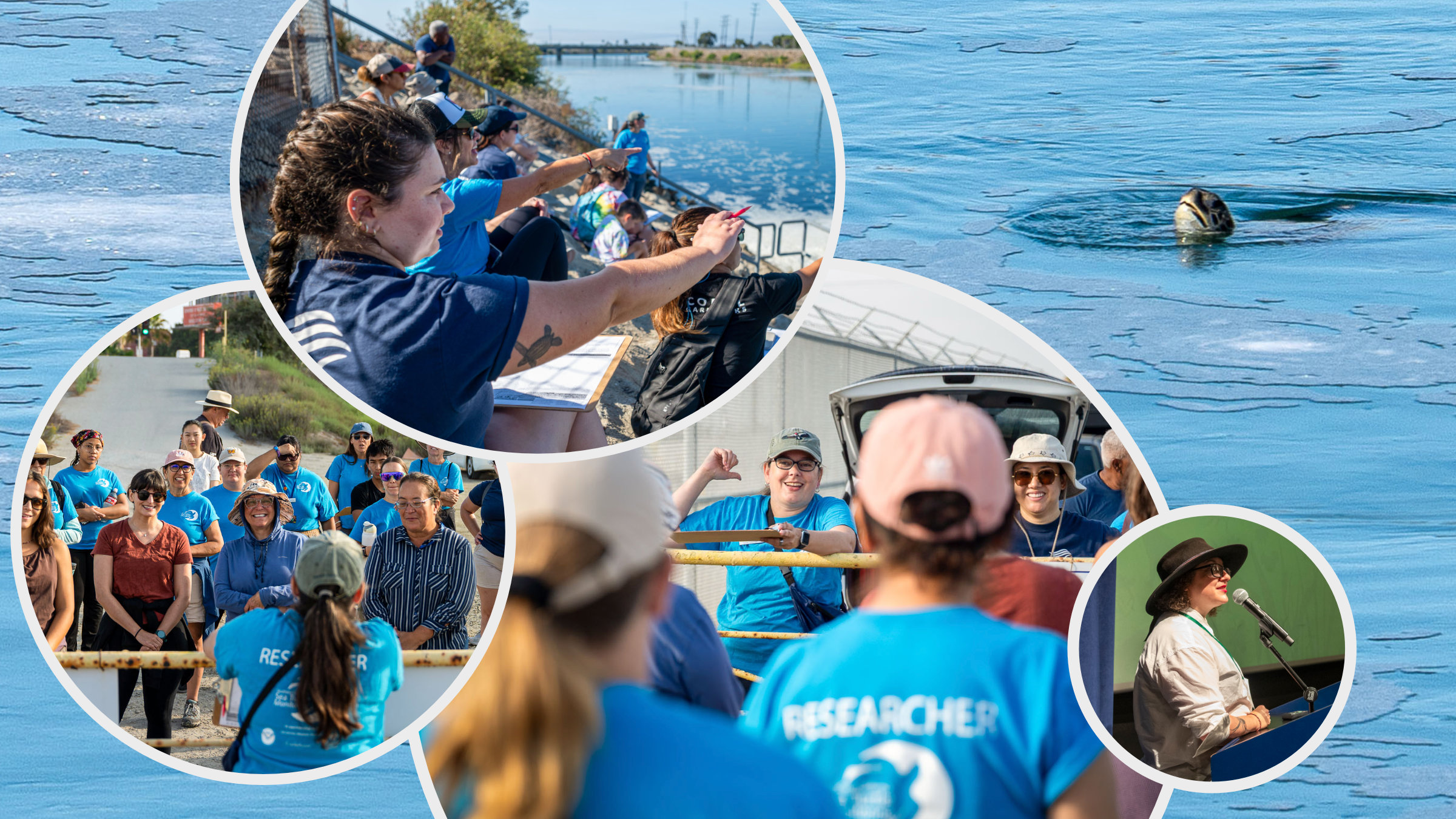
Some specific examples of community science include volunteers counting sea turtles surfacing in the San Gabriel River, school children recording animal sightings in a community science app, or gamers identifying images of deep sea creatures through the app Fathomverse.
Keynote speaker Dan Robinette from Point Blue Conservation shared the ways that community science has expanded the possibilities in bird research and outreach. Networks of volunteers, educators, and scientists working together can deliver transformative change for animals and habitats.
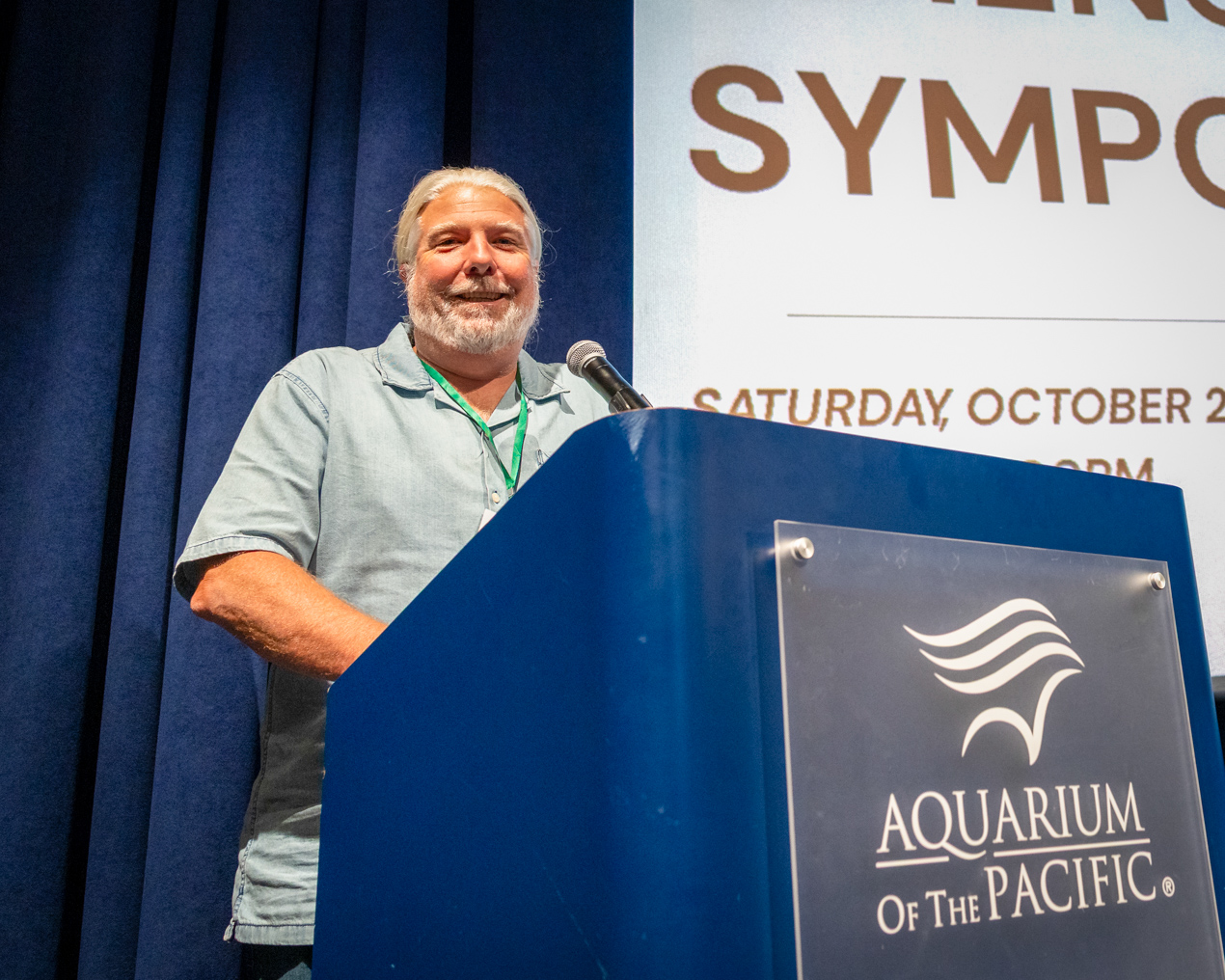
As one example he described how community science data on harbor seals in California indicated a decline in the population. This provided motivation for official government-led census.
Even as a professionally trained scientist, he shared that he is still learning. Listening to the community is a strong component of that learning.
Building conservation or research independent of the people that live near the research does not make sense. He stressed that data collected “isn’t mine; it belongs to all of us,” and shared some examples of how that data makes it to you and other members of the community.
One example is the Marine Species Report Card hosted by the Aquarium of the Pacific. The Report Card features population trends of thirty marine species found in the state of California. Data for eight of those species came from community science projects.
Lightning talks from eleven speakers at the Symposium took a quick, but deep dive into specific community science programs. Decentralized participation emerged as a theme.
Many speakers shared programs that allow individuals to contribute via apps on their own, without needing to participate at a fixed day or time. Examples included the Pacific Marine Mammal Center’s Dolphin Spotter, an app that allows Southern California beachgoers to submit photographs of dolphins, and San Diego Natural History Museum’s Discover the Nat: Glass Photography project hosted on Zooniverse in which volunteers tag attributes of historic images of reptiles.
Another theme was how community science is a form of career exploration.
Aquarium Volunteer Jessica Medrano shared how volunteering with the San Gabriel River sea turtle monitoring program evolved into pursuit of a master’s degree on the same topic.
Nancy Caruso, a marine biologist and founder of the nonprofit organization Get Inspired, described how classrooms are a wonderful place to raise imperiled species like kelp and abalone, which can then be outplanted to the ocean to increase populations.
And as a final example, Aquarium Volunteer Lizette Ashcraft with the Monarch Monitoring Project encouraged involvement of “your little scientist” in planting monarch gardens and other community science endeavors.
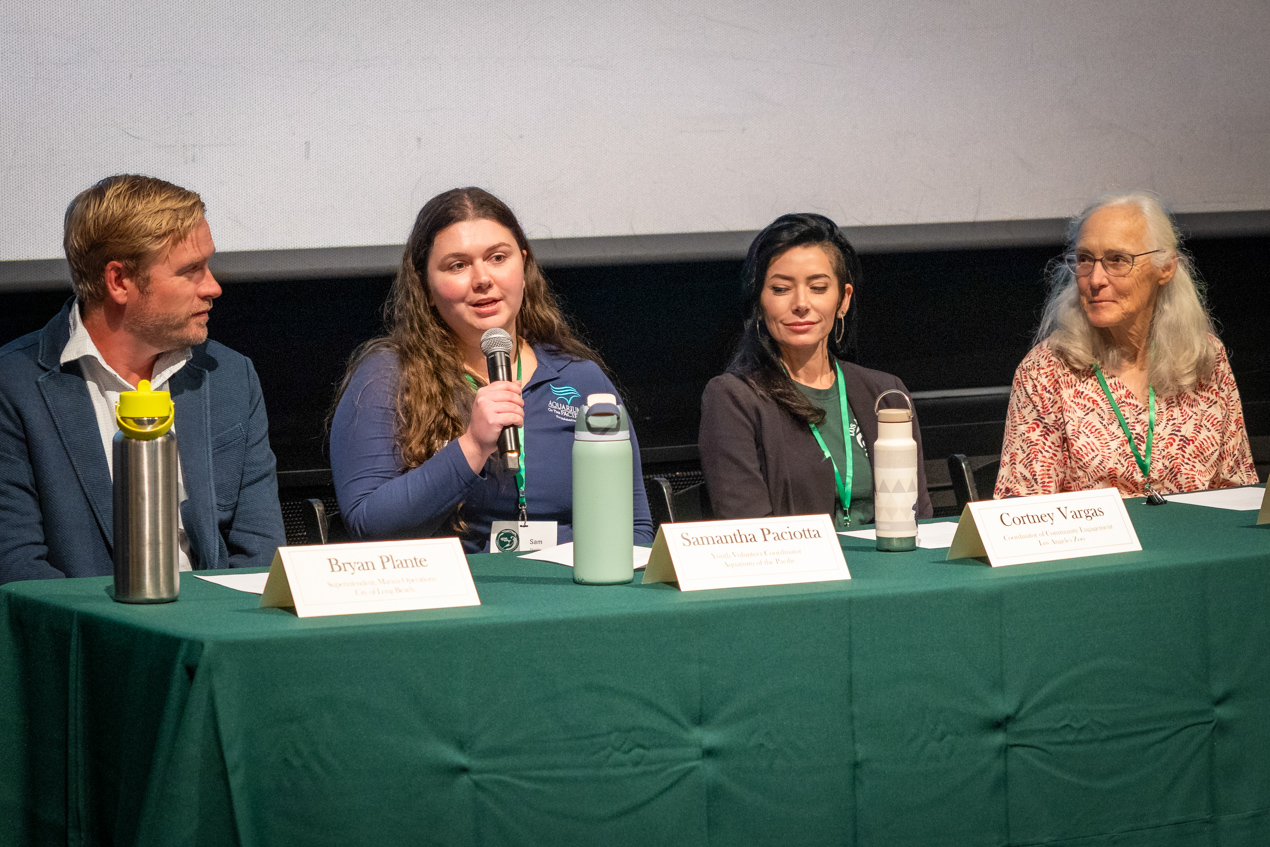
A panel discussion rounded out the presentations and returned to the theme of partnership. Panelists described how partners from different sectors—academic institutions, nonprofits, and community members—come together to build a program with more facets and more reach than they can achieve on their own.
Plankton Watch was an example. In this program, multiple interested parties contribute data on what plankton—microscopic plants or animals that float near the surface of the water—is in our coastal waters, and then this information is shared back with the public. The amount of data is far larger than if a single entity was doing the collection, allowing for a more comprehensive understanding of our coast.
The day closed with a poster session and reception where participants could explore each other’s projects more deeply. There was electricity in the air—lots of passionate people rallying around each other, working to make our communities better understood, and more sustainable for people and nature together into the future.
Save the date for the next symposium held in October 2027. The public is welcome! But you don’t have to wait until then to get involved—there are many ways to be a scientist in your community. Find out more about community science programs at the Aquarium on our website.

Jennie Dean
Jennie Dean is the Aquarium’s inaugural vice president of education and conservation. She focuses on the amplification and enhancement of the Aquarium’s work in species conservation and learning for all audiences. Previously Dean was a program director at the University of California, Los Angeles’ Institute of the Environment and Sustainability, where she oversaw programs engaging the private sector on corporate sustainability and consulted with island governments on sustainable development of their blue economy.