Harbor Seal
Phoca vitulina

Harbor Seal
Phoca vitulina
There is variability in population trend of harbor seal across different parts of the California coast.
Morphology
Harbor seals are part of the true seal family, meaning they have small front flippers and crawl on land by undulating in a caterpillar-like movement. Adult males typically range from 1.4 to 2.0 meters in length and weigh between 70 to 170 kilograms. Females are slightly smaller, measuring 1.2 to 1.7 meters and weighing 50 to 150 kilograms. They have a fusiform body shape, which is rounded in the middle and tapered at both ends. This streamlined form aids in efficient swimming. Harbor seals display a range of colors from light gray to silver with dark spots, or black to dark gray with white rings. Harbor seals have a rounded head with a blunt snout. They lack external ear flaps, but have ear openings that close when diving. Their nostrils are distinctively V-shaped. They possess 34 to 36 teeth, with sharp front teeth for grasping and tearing food, and back teeth adapted for crushing shells and crustaceans.
Habitat and Range
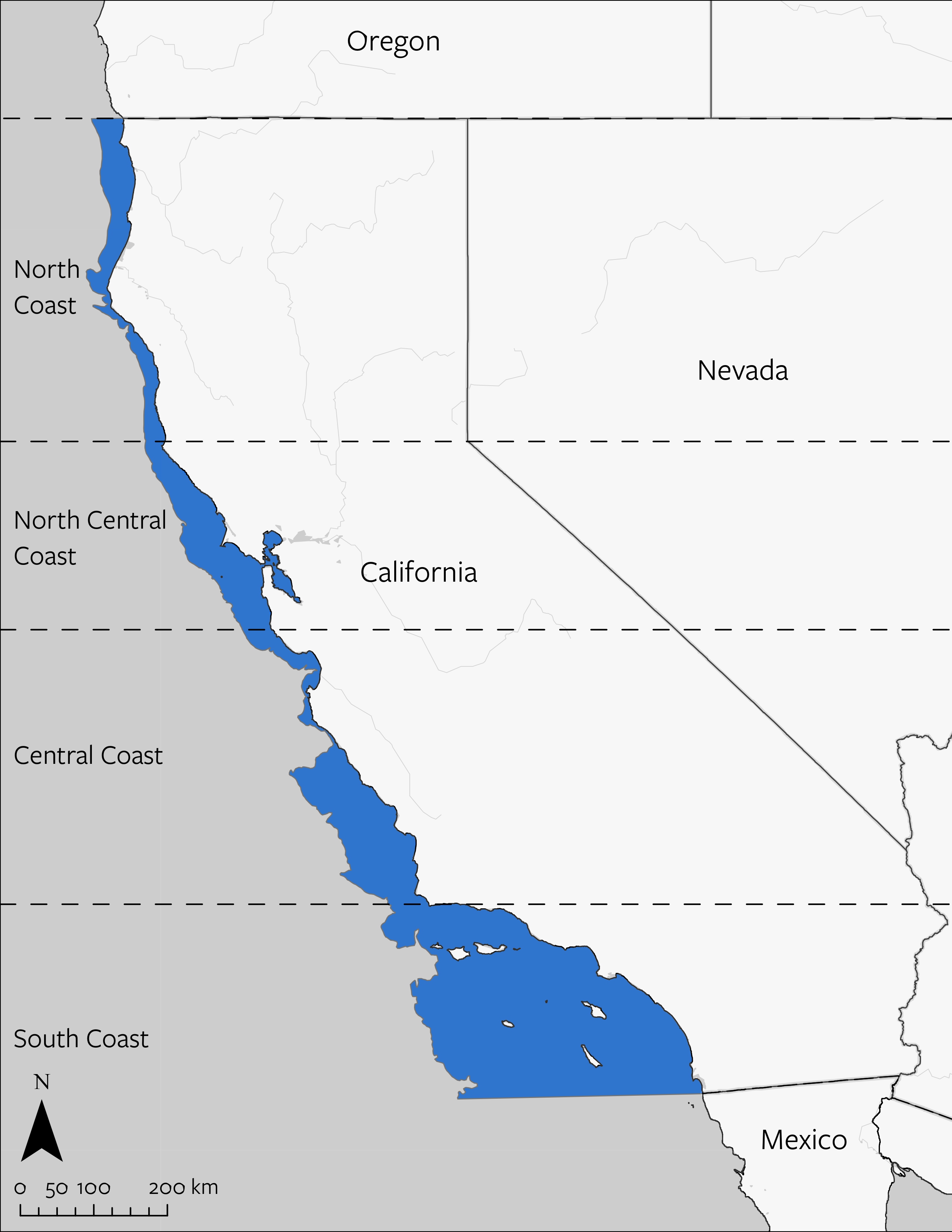
Harbor seals live in temperate coastal waters off the coasts of North America, Europe, and Asia. Along the U.S. West Coast, they can be found from Baja California, Mexico to the Bering Sea, as well as on all five islands in the Channel Islands National Park. On San Miguel Island, 1,100 harbor seals breed every year, a popular area for four other seal species. Harbor seals are considered non-migratory. Weaned pups may disperse 10 to 100 kilometers from natal beaches, but are thought to recruit back to their natal areas at age 1 or 2 years. They are often seen on islands, rocky coastlines, bays, estuaries, sandy beaches, rocky reefs and mudflats.
Range Map
Reproductive Biology and Life History
Harbor seals have an average lifespan of 25 to 30 years. They reach sexual maturity between three and seven years old. In California, Harbor seals breed from late winter to early summer months, with the earliest breeding occurring in the south. Females have a 10-month pregnancy and will typically mate and give birth every year. At birth, pups weigh about 11 kilograms and can swim within minutes. Harbor seal mothers form strong bonds with their pups, nursing them both on land and in the water. They produce high-fat milk that is crucial for the pup’s development. The bond is essential for the pup’s survival, and separation due to disturbances can be detrimental. They are weaned after four to six weeks.
Ecology
Harbor seals are carnivorous and opportunistic feeders, and mainly feed on fish, shellfish, and crustaceans. Their long and thick whiskers called vibrissae detect vibrations in the water column, aiding them in catching prey. When they are not foraging or traveling at sea, they rest on reefs, rocks, and beaches. Hauling out, or resting outside of the water, allows them to regulate body temperature, shed hair, interact with other seals, give birth, and nurse pups. They often rest in groups to avoid predators and to spend less time being vigilant for predators.
Cultural and Historical Context
Historically, harbor seals have been hunted for their perceived threat to fisheries. In the U.S., hunting programs targeted them until the practice was banned in 1960. Prior to Californians hunting seals due to the belief that seals were “stealing” fish from commercial fishers, the Tongva people are known to have harvested seals for food and clothing.
Date modified: January 2025
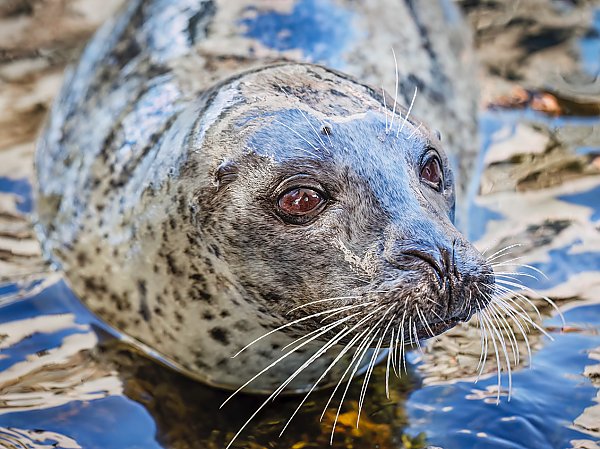
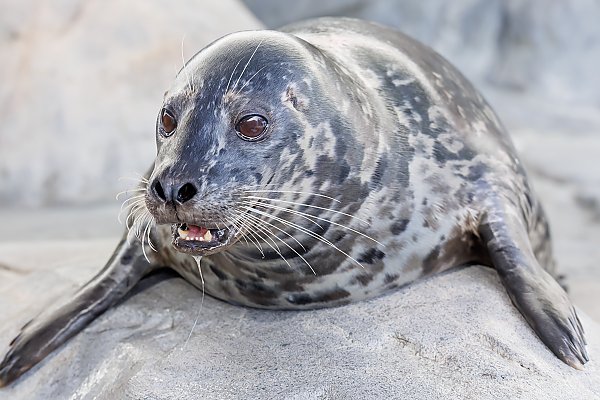
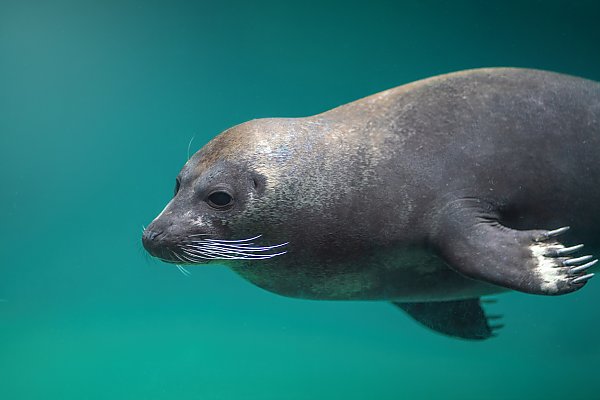
This animal can be found at the Aquarium of the Pacific
Primary ThreatsPrimary Threats Conditions
Threats and Conservation Status
Ever since the passing of the Marine Mammal Protection Act (MMPA) in 1972, harbor seals have been protected from hunting, collection, killing, and harassment. As of now, the harbor seal is listed as a protected species under the MMPA and as being of least concern by the International Union for Conservation of Nature (IUCN). A wide variety of community science and government programs census harbor seals. Range wide surveys are irregularly conducted for the whole state by NOAA every 10 or more years, which are too infrequent to conduct a trend analysis. Fortunately, consistent site-based surveys give useful information on more local trends. Notably, assembling data from the Central and North Central coastal regions of California, there is an annual decline of 3.6%, which explains 70% of the year-to-year variation in numbers between 2000 and 2024. However, the Central region shows no evidence of such a decline. Erring on the side of caution it has been classified as strong decline.
Current threats to harbor seals include entanglement in fishing gear, illegal harassment, habitat loss, chemical contaminants, harmful algal blooms, infectious disease, and disturbance from motorized and unmotorized vessels. As a top predator, harbor seals often consume animals that have accumulated toxins or contaminants and as a result seals may concentrate toxins in their bodies. These chemicals threaten reproductive and immune systems and are passed on to pups. In addition, domoic acid poisoning, which is most well known for its impact on sea lions, is an example of the consequences of concentrating biotoxins up the food chain. Domoic acid comes from harmful algal blooms that get consumed by fish and then ultimately by seals or sea lions. These harmful algae are favored by warming waters and fertilizer runoff and blooms are more frequent than they used to be.
Management strategies to address these challenges include seasonal beach closures during pupping seasons to avoid harassment, public education programs to reduce harassment and pollution, and consideration of non-lethal deterrence methods to protect fisheries.
Population Plots
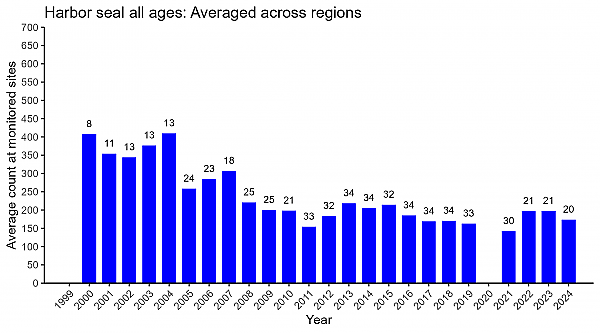
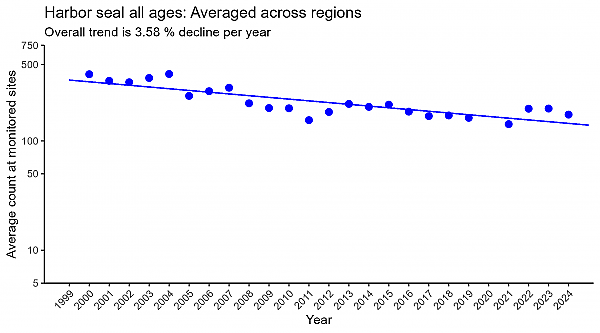

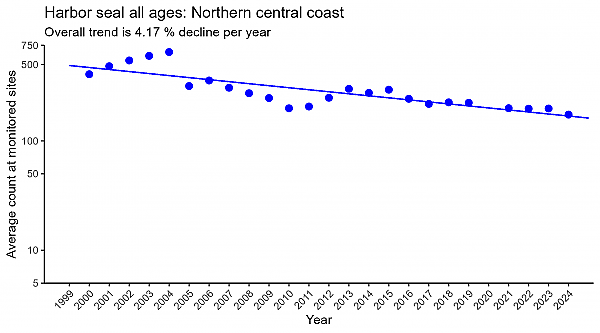
Data Source: The data were obtained from the National Park Service, Central California Harbor Seal Monitoring Program, and Point Blue. Too few sites were sampled in 2020 (a COVID year) to warrant reporting, and hence 2020 is missing in the above graphs. The numbers on top of the bars represent number of sampling sites.
- Beeson, M. J., & Hanan, D. A. (1996). An evaluation of pinniped-fishery interactions in California. Report to the Pacific States Marine Fisheries Commission, 46.
- Greig, D. J., Gulland, F. M., Harvey, J. T., Lonergan, M., & Hall, A. J. (2019). Harbor seal pup dispersal and individual morphology, hematology, and contaminant factors affecting survival. Marine Mammal Science, 35(1), 187-209.
- Greig, D. J., Ylitalo, G. M., Wheeler, E. A., Boyd, D., Gulland, F. M., Yanagida, G. K., ... & Hall, A. J. (2011). Geography and stage of development affect persistent organic pollutants in stranded and wild-caught harbor seal pups from central California. Science of the Total Environment, 409(18), 3537-3547.
- Lowry, M. S., Carretta, J. V., & Forney, K. A. (2008). Pacific harbor seal census in California during May-July 2002 and 2004. California Fish and Game, 94(4), 180-193.
- Lowry, M. S., Nehasil, S. E., & Jaime, E. M. (2017). Distribution of California sea lions, northern elephant seals, pacific harbor seals, and Steller sea lions at the Channel Islands during July 2011-2015.
- Manning, L. L. (1989). Marine mammals and fisheries conflicts: a philosophical dispute. Ocean and Shoreline Management, 12(3), 217-232.
- Mos, L., Cameron, M., Jeffries, S. J., Koop, B. F., & Ross, P. S. (2010). Risk‐based analysis of polychlorinated biphenyl toxicity in harbor seals. Integrated Environmental Assessment and Management, 6(4), 631-640.
- McHuron, E. A., Greig, D. J., Colegrove, K. M., Fleetwood, M., Spraker, T. R., Gulland, F. M., ... & Frame, E. R. (2013). Domoic acid exposure and associated clinical signs and histopathology in Pacific harbor seals (Phoca vitulina richardii). Harmful algae, 23, 28-33.
- Radde, H. D. (2021). Sea lion hunting strategies among late Holocene hunter-gatherer-fishers on Santa Catalina Island, California, USA. Quaternary International, 597, 24-36.